
Wildlife in Tanzania
Tanzania
Parks with a visitor safari desk
Flagship wild places are a booked product — operators, camps, park fees handled with the trip. You join a licensed vehicle. Season matters; the week is still a traveler week.
- Licensed operators you can book
- Known parks
- Wild viewing in season
The vibe
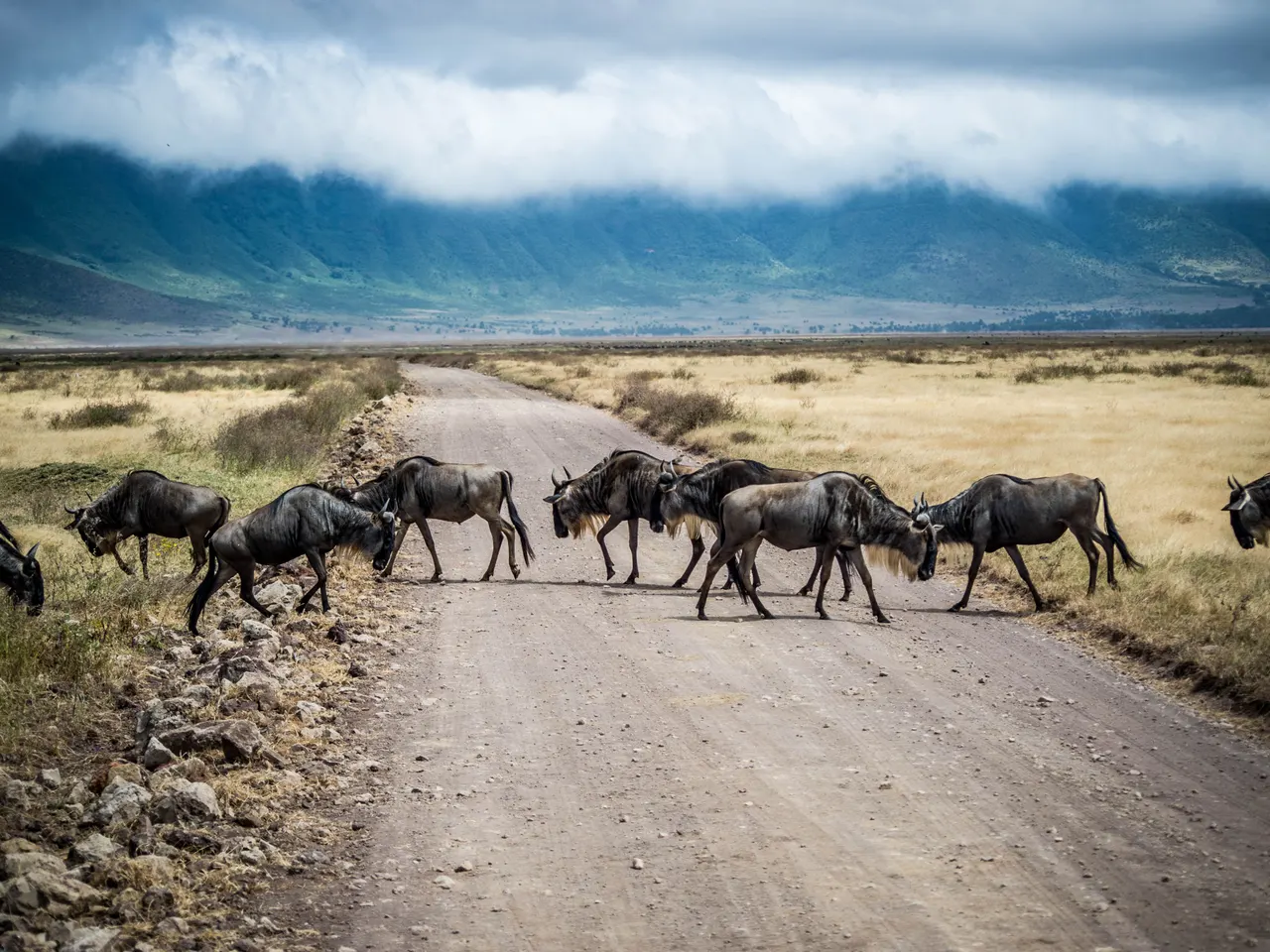
Watching animals here unfolds on massive, dusty plains where you track vast herds across golden savannahs under endless skies. The dry months bring the famous river crossings and concentrate game around shrinking water sources. Safari vehicles cluster thickly at major sightings, giving the experience a well-trodden, classic pilgrimage feel rather than a solitary wilderness trek.
Conservation fees and daily park tickets are handled for you by your safari lodge or driver.

Arusha National Park
Arusha
Zenith4237 / Wikimedia Commons (CC BY-SA 4.0)
A diverse protected area featuring Mount Meru, montane forests, and alkaline lakes (Momella Lakes) filled with flamingos. It is a premier destination for walking safaris, canoeing, and spotting blue monkeys, giraffes, and leopards.
Access. Just a 45-minute drive from the city of Arusha, making it one of the most accessible wildlife parks in the country.
Notes. Offers rare opportunities for armed ranger-led walking safaris and canoeing among waterbirds.

Gombe Stream National Park
Kigoma Region
Ikiwaner / Wikimedia Commons (GFDL 1.2)
Famous as the site of Jane Goodall's pioneering behavioral research, this tiny, rugged strip of steep forest bordering Lake Tanganyika is home to habituated chimpanzees and diverse monkey species.
Access. Reached by boat from the nearby town of Kigoma on Lake Tanganyika, which is accessible via domestic flights or train.
Notes. Strenuous hiking is required on steep forest trails to locate and observe the chimpanzee communities.

Katavi National Park
Katavi Region
Earth Science and Remote Sensing Unit , Lyndon B. Johnson Space Center / Wikimedia Commons (Public domain)
A remote, untouched wilderness in western Tanzania where massive pods of hippos, huge Nile crocodiles, and huge herds of buffalo and elephants gather around shrinking floodplain pools during the dry season.
Access. Accessed almost exclusively by light aircraft charters from Dar es Salaam or Arusha due to its remote location.
Notes. Best visited during the dry season (July to October) when wildlife is heavily concentrated around remaining water sources.

Lake Manyara National Park
Manyara Region
Ventus55 / Wikimedia Commons (CC BY-SA 4.0)
A compact park featuring a shallow alkaline lake that attracts thousands of flamingos and waterbirds, flanked by groundwater forests and acacia woodlands known for tree-climbing lions and troops of baboons.
Access. Located just off the main northern safari circuit highway, about a 1.5-hour drive west of Arusha.
Notes. Combining a morning game drive with a guided canopy walkway offers a unique perspective on the forest fauna.

Lake Natron Wetlands
Arusha
Sentinel Hub / Wikimedia Commons (CC BY 2.0)
A harsh, striking soda lake nestled beneath Ol Doinyo Lengai volcano, serving as the single most important breeding site in East Africa for lesser flamingos, who nest on its mineral crusts.
Access. Reached via rough 4x4 tracks north from Arusha or Mto wa Mbu through the Rift Valley escarpment.
Notes. Best visited during the dry season when lake levels drop and large flocks of flamingos gather to breed.

Mafia Island Marine Park
Pwani Region
Abdul255 / Wikimedia Commons (CC BY-SA 3.0)
Protected Indian Ocean waters surrounding Mafia Island renowned for seasonal aggregations of whale sharks, pristine coral reefs, nesting sea turtles, and rich marine biodiversity.
Access. Reached via a short domestic flight from Dar es Salaam to Mafia Island airstrip, followed by boat excursions from local lodges.
Notes. Whale shark snorkeling is strictly managed under code-of-conduct guidelines to protect the animals.

Mahale Mountains National Park
Kigoma Region
Earth Science and Remote Sensing Unit, NASA Johnson Space Center / Wikimedia Commons (Public domain)
Stretching along Lake Tanganyika, this pristine park protects one of the world's largest habituated wild chimpanzee populations. Visitors trek through lush rainforest slopes to observe chimpanzees in their natural habitat.
Access. Accessible only by boat or light aircraft along Lake Tanganyika; most travelers fly into Kigoma and take a boat taxi or charter.
Notes. Chimpanzee trekking permits are strictly regulated, and visitor numbers are kept very low to protect the apes.

Ngorongoro Conservation Area
Arusha
George Lamson / Wikimedia Commons (CC BY-SA 2.0)
Centered around a massive volcanic caldera, this protected area harbors a dense concentration of resident wildlife, including the rare black rhino, elephants, lions, and large herds of ungulates sharing the floor with local Maasai pastoralists.
Access. Reached by 4x4 safari vehicle from Arusha via the town of Karatu, descending steep crater rim roads onto the crater floor.
Notes. Vehicle permits and crater descent fees apply; daily visitor limits help manage congestion on the crater floor.

Nyerere National Park (Selous)
Coastal Zone
Earth Science and Remote Sensing Unit , Lyndon B. Johnson Space Center / Wikimedia Commons (Public domain)
One of Africa's largest protected wildlife reserves, offering untamed wilderness along the Rufiji River. Visitors experience classic big-game safaris, boat safaris, and walking safaris among elephants, hippos, wild dogs, and crocodiles.
Access. Accessible via light aircraft flights from Dar es Salaam or Zanzibar to airstrips within the park, or via long-distance 4x4 road transfers.
Notes. Boat safaris on the Rufiji River provide unique angles for viewing hippos, crocodiles, and water-dependent wildlife.

Ruaha National Park
Southern Highlands Zone
Earth Science and Remote Sensing Unit , Lyndon B. Johnson Space Center / Wikimedia Commons (Public domain)
Tanzania's largest national park is a rugged, remote wilderness renowned for its massive elephant populations, large prides of lions, leopards, cheetahs, and endangered African wild dogs roaming dramatic semi-arid river landscapes.
Access. Reached primarily by scheduled or chartered bush flights from Dar es Salaam or Arusha to one of the park's airstrips.
Notes. Dry season (May to December) concentrates game along the Great Ruaha River, offering exceptional predator sightings.

Serengeti National Park
Lake Zone
Giles Laurent / Wikimedia Commons (CC BY-SA 4.0)
World-famous for the Great Migration, this vast savanna ecosystem hosts millions of wildebeest, zebras, and predators like lions, cheetahs, and leopards. It is the quintessential African safari destination offering dramatic wildlife viewing year-round.
Access. Accessible via scheduled or chartered flights from Arusha to various park airstrips, or by 4x4 safari vehicles driving from Arusha or Ngorongoro.
Notes. Best time for the migration river crossings is July to October, while calving season peaks in February.

Tarangire National Park
Manyara Region
Andrey Filippov 安德烈 from Moscow, Russia / Wikimedia Commons (CC BY 2.0)
Famous for its giant baobab trees and massive elephant herds, Tarangire offers classic dry-season game viewing along the Tarangire River, attracting large numbers of wildebeest, zebras, giraffes, and tree-climbing pythons.
Access. Easily accessible by a scenic 2-hour drive on paved roads southwest of Arusha in northern Tanzania.
Notes. Wildlife concentration peaks during the dry season from June to October as animals congregate around the river.