
Wildlife in Kenya
Kenya
Safari days licensed operators already sell
Known reserves run visitor safaris as the trip. You book a vehicle and a camp. Season shapes the grass and the herds; operators already plan around it.
- Bookable safari operators
- Known wild parks
- Season mood, no fake guarantees
The vibe
Tracking game across sweeping savannahs immerses you in the quintessential East African safari experience, complete with iconic dust-haze sunrises. The dry season from July to October brings peak predator action and the dramatic river crossings of the great migration. This is a well-established pilgrimage circuit where you move in organized safari vehicles alongside other travelers while staying in secluded tented camps.
Standard daily conservation permit per park

Aberdare National Park
Nyeri
Francesco Veronesi / Wikimedia Commons (CC BY-SA 2.0)
High-altitude forest and moorland reserve featuring dramatic waterfalls, dense mist forests, and unique wildlife such as the elusive bongo antelope, leopards, and giant forest hogs.
Access. Accessed by road from Nyeri or Nyahururu, with game viewing often centered around elevated forest lodges.
Notes. Temperatures can drop significantly at night due to the high altitude; pack warm clothing.

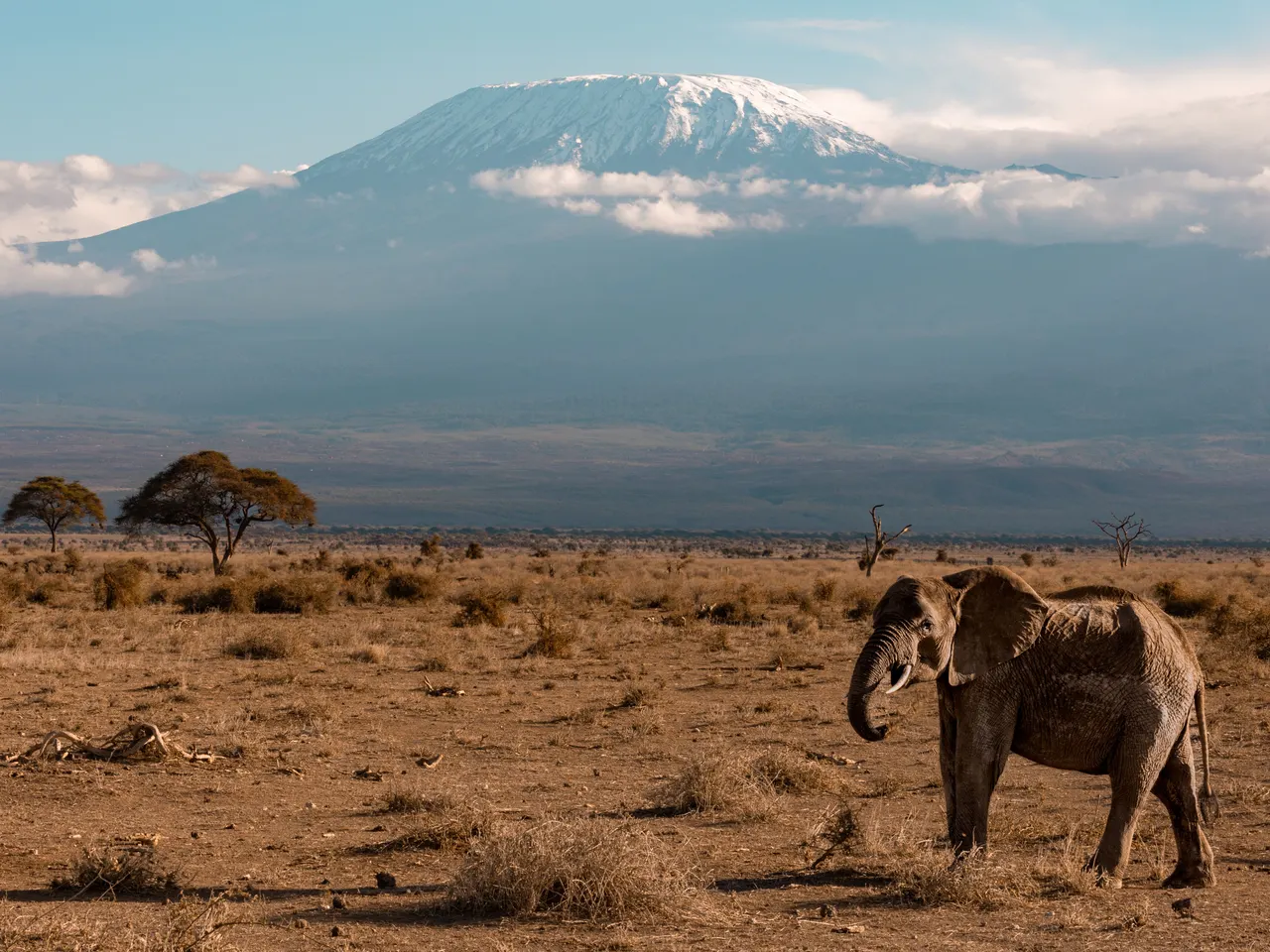
Amboseli National Park
Kajiado County
flightlog / Wikimedia Commons (CC BY 2.0)
Famed for its large herds of free-ranging African elephants set against the iconic backdrop of Mount Kilimanjaro. Amboseli's swampland habitats also attract numerous bird species, hippos, and big cats.
Access. Accessible by road from Nairobi via Namanga or Arusha road, or by air to Amboseli airstrip.
Notes. Dry seasons (June to October and January to February) offer the best wildlife concentrations and clearest mountain views.

Kakamega Forest National Reserve
Kakamega County
Kakamega Forest — Wikidata / Wikimedia Commons
Kenya's only surviving rainforest, representing the easternmost remnant of the ancient Guineo-Congolian rainforest. It is a world-class birding and primate hotspot, home to rare forest birds, de Brazza's monkeys, and giant-headed forest reptiles.
Access. Explored on foot with mandatory local guides stationed at the Kenya Wildlife Service or KFS station gates.
Notes. Rain gear and sturdy hiking boots are recommended year-round due to frequent rainforest showers.

Kisite-Mpunguti Marine National Park
Kwale
Knyn wndr / Wikimedia Commons (CC BY-SA 4.0)
A protected marine reserve off the southern coast of Kenya near Shimoni, famous for its resident pods of Indo-Pacific bottlenose and humpback dolphins. The crystal-clear coral gardens also attract vibrant marine life.
Access. Explored via traditional dhow boats and speedboats departing from Shimoni or Wasini Island with licensed marine guides.
Notes. Snorkeling and dolphin-watching are strictly regulated to protect coral reefs and marine mammals; park entry fees apply.

Kora National Park
Tana River County
Kora National Park — Wikidata / Wikimedia Commons
A remote and rugged wilderness area featuring riverine forests, rocky inselbergs, and wide-open bush country famously studied by George and Joy Adamson. It offers adventurous wildlife viewing with populations of elephants, hippos, and various wild cats.
Access. Best accessed via robust 4x4 vehicles on challenging roads from Meru or Ukasi; guided expedition style is essential.
Notes. Very remote with limited tourist infrastructure; visitors must be fully self-sufficient or booked with an experienced expedition outfitter.

Lake Bogoria National Reserve
Baringo
Steve Garvie from Dunfermline, Fife, Scotland / Wikimedia Commons (CC BY-SA 2.0)
A saline, alkaline lake set against a dramatic volcanic backdrop, world-renowned for hosting massive flocks of lesser and greater flamingos alongside natural hot springs and geysers.
Access. Reached by road from Nakuru or Eldoret via Marigat town.
Notes. Best visited during dry months when flamingo concentrations peak.

Lake Naivasha and Hell's Gate
Nakuru
Nicolas Barcet from Villejuif, France / Wikimedia Commons (CC BY 2.0)
A freshwater Rift Valley lake surrounded by swamps, acacia forests, and geothermal cliffs, famous for large populations of hippos and abundant birdlife. Adjacent Hell's Gate allows walking and cycling safaris among zebras and giraffes.
Access. About a 2-hour drive northwest of Nairobi; boat rentals are available at lake shores.
Notes. Walking safaris require caution around wild herbivores and buffalo; hire a local guide for safety.

Lake Nakuru National Park
Nakuru
Nigel Wedge from Fife, Scotland / Wikimedia Commons (CC BY 2.0)
A stunning Rift Valley soda lake famous for its flocks of flamingos, waterbirds, and thriving populations of both black and white rhinos. The surrounding acacia forests also shelter leopards and Rothschild's giraffes.
Access. Located a short drive from Nakuru town, fully accessible by paved road from Nairobi.
Notes. Park gates are strictly monitored; vehicle speed limits are enforced to protect wildlife.

Lewa Wildlife Conservancy
Meru County
rkenya / Wikimedia Commons (CC BY 4.0)
A pioneering conservation showcase set against the backdrop of Mount Kenya, protecting significant populations of black rhinos, Grevy's zebras, and sitatungas. Its community-led conservation model makes it one of East Africa's most successful wildlife havens.
Access. Visitors arrive via scheduled bush flights from Nairobi or by private 4x4 safari vehicles, exploring via guided game drives and walking safaris.
Notes. Conservation fees directly support local community projects and anti-poaching units; high-end eco-lodging is standard.

Masai Mara National Reserve
Narok
Steve Garvie from Dunfermline, Fife, Scotland / Wikimedia Commons (CC BY-SA 2.0)
World-famous for the Great Migration, the Masai Mara offers incredible year-round viewing of lions, leopards, elephants, and vast herds of wildebeest and zebras. The rolling savannah landscape provides classic safari scenery and prolific predators.
Access. Reached via 4x4 safari vehicles from Nairobi or through scheduled bush flights to local airstrips; park entry fees apply.
Notes. The river crossings during the Great Migration peak between July and October. Maintain respectful distances from wildlife.

Meru National Park
Meru County
iNaturalist user: lazarus / Wikimedia Commons (CC BY 4.0)
A wild, less-visited savannah wilderness featuring large rivers, dense riverine forests, and wide-open plains. Made famous by Joy Adamson's book 'Born Free', it shelters lions, leopards, cheetahs, and reintroduced rhinos.
Access. Reached via road from Nairobi through Nanyuki or Meru town, or via private charter flights.
Notes. Remote and pristine, offering a true off-the-beaten-path safari experience.

Ol Pejeta Conservancy
Laikipia County
Earth Science and Remote Sensing Unit , Lyndon B. Johnson Space Center / Wikimedia Commons (Public domain)
East Africa's largest black rhino sanctuary and the final refuge for the world's last remaining northern white rhinos, situated on the Laikipia plateau. It also features a dedicated chimpanzee sanctuary and diverse savannah wildlife.
Access. Easily accessible by road from Nairobi (approx. 3-4 hours) or via domestic flights to Nanyuki airstrip.
Notes. Night game drives and lion tracking experiences are available with authorized guides; conservancy fees apply.

Samburu National Reserve
Samburu
David Hewitt / Wikimedia Commons (CC BY 3.0)
An arid, rugged semi-desert reserve watered by the Ewaso Ng'iro river, home to unique northern wildlife species known as the Samburu Special Five: Grevy's zebra, Somali ostrich, reticulated giraffe, gerenuk, and beisa oryx.
Access. Accessible via scheduled flights from Nairobi to airstrips in the reserve or a rugged full-day drive.
Notes. Temperatures are high year-round; morning and late afternoon game drives are recommended.

Tsavo East National Park
Kitui County
Tsavo East National Park — Wikidata / Wikimedia Commons
One of Kenya's oldest and largest wildlife sanctuaries, famous for its iconic 'red elephants' that dust-bathe in the iron-rich soil. The vast arid landscape is also home to lions, leopards, and the Yatta Plateau, the world's longest lava flow.
Access. Accessible via game drive safaris from Mombasa or Nairobi, with entry managed at park gates like Manyani and Bachuma.
Notes. Best visited during the dry seasons from June to October and January to February; carry plenty of water and respect park distance rules.

Tsavo West National Park
Taita–Taveta
Tsavo West National Park — Wikidata / Wikimedia Commons
Characterized by dramatic volcanic scenery, underground springs, and the magical Mzima Springs where hippos and crocodiles can be viewed through an underwater glass tank. It offers a more lush and varied landscape compared to its eastern counterpart.
Access. Explored via guided 4x4 safari vehicles entering from Mtito Andei or through the Tsavo gates.
Notes. Combine with Tsavo East for a complete ecosystem experience; watch for sharp volcanic rock on walking safaris.

Watamu Marine National Park and Reserve
Kilifi County
April Nobile / Wikimedia Commons (CC BY 4.0)
Protected coastal and marine waters featuring vibrant coral reefs, green turtles, and seasonal humpback whale sightings offshore, alongside rich mangrove birdlife in Mida Creek.
Access. Located on Kenya's coast north of Mombasa; accessible via Malindi airport or road transport.
Notes. Boat excursions and guided mangrove boardwalks operate daily with local conservation groups.