
Surfing in Japan
Including Habushiura Coast, Hebara Beach, and Hiwasa. On the map.
The vibe
Paddling out into regional swells brings a uniquely polite lineup etiquette where order and respect dictate every wave. Typhoon season from late summer through autumn delivers the most consistent and powerful swells to the coastlines. The vibe ranges from bustling weekend surf towns popular with city escapees to empty stretches where you can surf in utter solitude.

Habushiura Coast, Niijima
Tokyo
Michael Tsutsui / Wikimedia Commons (CC BY-SA 3.0)
A magnificent 6.5-kilometer stretch of white quartz sand on a volcanic island administered by Tokyo, famous for heavy, hollow beach breaks. Consistent Pacific swells wrap around the island to produce world-class waves that have hosted international surfing championships. Local surf rentals and pensions are clustered near the village.
Access. Take the high-speed ferry or overnight passenger ship from Takeshiba Pier in Tokyo directly to Niijima Port.
Notes. Powerful undertows and heavy shorebreak; recommended for confident intermediate and advanced surfers.

Hebara Beach, Chiba
Chiba Prefecture
FoxyStranger Kawasaki / Wikimedia Commons (CC BY-SA 3.0)
Located on the wild Boso Peninsula, Hebara is renowned for delivering powerful, hollow rights and lefts that frequently host professional surfing contests. It handles solid Pacific swells better than most surrounding spots.
Access. Drive from Tokyo via the Tokyo-Wan Aqua-Line or take the JR Sotobo Line to Katsuura Station and catch a local bus or taxi.
Notes. Can feature heavy shore breaks and strong undertows during large typhoons. Best suited for intermediate to advanced surfers.

Hiwasa, Tokushima
Tokushima Prefecture
Nagono / Wikimedia Commons (CC BY-SA 3.0)
A scenic coastal town on Shikoku's eastern shore offering punchy beach breaks and reef setups that catch clean Pacific swells. It remains a favorite escape for surfers seeking a more traditional and laid-back surf adventure.
Access. Accessible via the JR Mugi Line to Hiwasa Station, or by car along the Shikoku coastal highways.
Notes. Localism can be present at smaller uncrowded reef peaks; show respect and surf with aloha.

Ichinomiya Coast, Chiba
Chiba Prefecture
アラツク / Wikimedia Commons (CC BY-SA 4.0)
One of Japan's most famous high-performance surfing hubs, featuring consistent beach breaks that host major national and international competitions. The shifting sandbanks produce powerful rights and lefts suitable for intermediate to advanced surfers. The vibrant local surf culture offers numerous board rental shops and surf schools right along the seawall.
Access. Accessible via the JR Keiyo or Sobu line from Tokyo to Kazusa-Ichinomiya Station, followed by a short walk or bike ride to the beach.
Notes. Crowded on weekends and holidays. Watch out for shifting rip currents and local wave etiquette.

Irabu Island Reefs, Okinawa
Okinawa Prefecture
Image Science and Analysis Laboratory, NASA-Johnson Space Center. "The Gateway to Astronaut Photography of Earth." / Wikimedia Commons (Public domain)
Turquoise waters surrounding Miyako and Irabu islands hide world-class coral reef breaks and flat-water lagoons that appeal to advanced surfers and kiteboarders alike. The remote tropical setting provides pristine wind and wave conditions.
Access. Fly into Miyako Airport (MMY) and rent a car to cross the bridge over to Irabu Island.
Notes. Remote reef passes require boat access or careful navigation over sharp coral. Strong outer-reef currents and typhoon awareness are essential.

Jodogahama Coast, Iwate
Iwate Prefecture
Raita Futo from Tokyo, Japan / Wikimedia Commons (CC BY 2.0)
A stunning rugged coastline in Sanriku Fukko National Park where dedicated surfers find punchy reef and point setups amid dramatic volcanic rock pillars. The cooler northern swells deliver clean, powerful waves for experienced travellers. Seasonal surf schools operate out of nearby Miyako town.
Access. Take the JR Yamada Line to Miyako Station, then take a local bus directly to the coastal park area.
Notes. Rugged coastline with sharp rocks and cold water; thick wetsuit required.

Kasari Peninsula Reefs, Amami Oshima
Kagoshima Prefecture
tinbotu / Wikimedia Commons (CC BY-SA 3.0)
A subtropical island chain featuring pristine coral reef breaks that fire with consistent Pacific and East China Sea swells. The crystal-clear water and uncrowded lineups make it a dream destination for intermediate to advanced reef surfers. Several surf camps and charter guides operate across the northern peninsula.
Access. Fly directly to Amami Airport from major Japanese cities, then rent a car to reach the northern reef accesses.
Notes. Sharp coral reefs, sea urchins, and strong tidal currents demand respect and reef booties.

Kisakihama Beach, Miyazaki
Miyazaki Prefecture
Ship1231 / Wikimedia Commons (CC BY-SA 3.0)
Miyazaki's premier beach break hub, famous for warm water, tropical ambiance, and consistent year-round swell production. It features multiple peaks stretching along a wide sandy expanse that handles all tide stages.
Access. A short drive or train ride from Miyazaki City, with buses running directly toward the coastal access points.
Notes. Can become very crowded during regional contests and holiday periods. Watch for jellyfish late in the summer season.
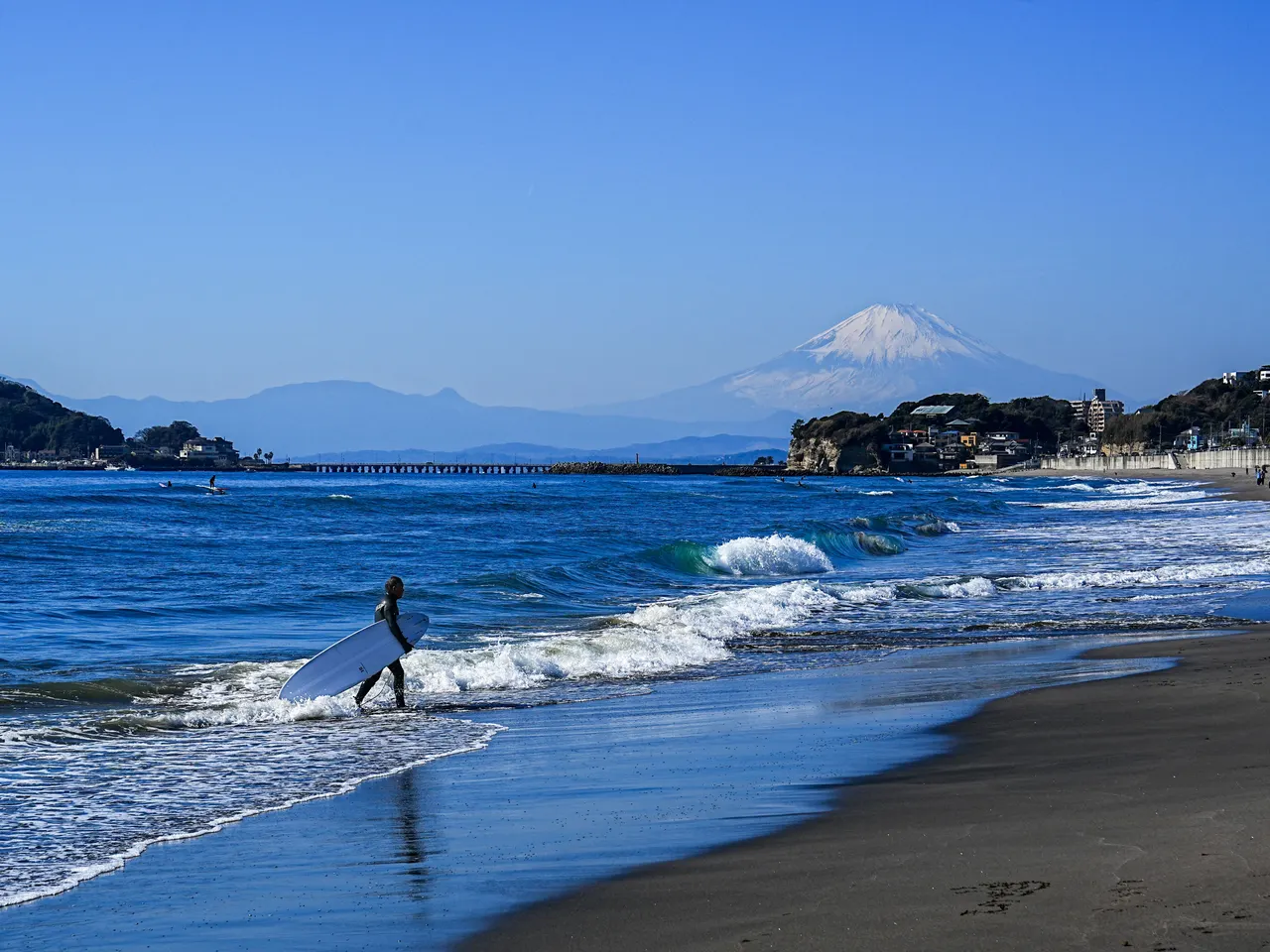
Kugasaki, Kamakura
Kanagawa Prefecture
A well-known beach break on Sagami Bay offering consistent wind swells and local surf culture just south of Tokyo. It is a popular spot for both longboarders and shortboarders looking for punchy peaks right off the coastline.
Access. Easily accessible by train via the Enoden line to Kamakura or Yuigahama station, followed by a short walk or bicycle ride to the beach.
Notes. Can get very crowded on weekends. Watch out for local etiquette and seasonal water temperature drops requiring a full wetsuit in winter.

Omiike, Lake Biwa, Shiga
Shiga Prefecture
The Gateway to Astronaut Photography of Earth (Actual photographer unknown) / Wikimedia Commons (Public domain)
Japan's largest freshwater lake hosts a thriving inland wingfoil and kiteboarding scene powered by thermal and frontal winds funneling through the surrounding mountains. The expansive open water provides clean, chop-free stretches perfect for progression and foiling. Local clubs offer gear demos, foil lessons, and safety boat support.
Access. Take the JR Kosei Line to Omi-Takashima Station, then a short taxi or walk to the lake shore.
Notes. Inland fresh water is less buoyant than saltwater; check local wind warnings before launching.

Shichigahama Coast, Miyagi
Miyagi Prefecture
Daisuke TSUDA / Wikimedia Commons (CC BY-SA 2.0)
A resilient northern Honshu surf hub featuring punchy beach breaks and reliable autumn typhoons swells. The cooler waters produce clean lines and hollow sections favored by core shortboarders. Local surf clubs and rental trailers operate near the main access points.
Access. Take the JR Tohoku Main Line to Tagajo Station, then drive or take local bus routes toward Shichigahama peninsula.
Notes. Wetsuits are mandatory most of the year due to cold northern currents. Respect local surf elders.

Tatsukushi Coast, Kochi
Kochi Prefecture
Reggaeman / Wikimedia Commons (CC BY-SA 3.0)
A rugged and remote coastal stretch on Shikoku's southwestern tip featuring powerful reef and point setups that draw dedicated swell-chasers. The dramatic rock formations create challenging rides away from the heavy crowds of major urban centers. Local surf guides and seasonal rentals are available in nearby townships.
Access. Accessible primarily by car via Kochi Expressway down to Tosashimizu, or via bus connections from Nakamura Station.
Notes. Shallow reef bottoms, strong urchin presence, and remote conditions require solid intermediate skills.