
Sightseeing in Greece
Greece
Ruins and islands with a ticket booth
Named archaeological sites and old towns are on the visitor circuit — ferries, buses, posted hours. You walk in with a ticket. The sites are why you fly.
- Public archaeological sites
- Ferries and buses a visitor uses
- Landmarks, not a minor local list
The vibe
Walking through these ancient sites feels like stepping into a living classroom where the scale of history dwarfs the modern world. Late spring and early autumn offer the most comfortable light for wandering without the oppressive heat of mid-summer. While the major monuments draw dense crowds and queues, you can easily find quiet corners by drifting into the surrounding streets and hillsides.

Acropolis of Athens
Attica
George E. Koronaios / Wikimedia Commons (CC BY-SA 4.0)
The Acropolis is the ultimate symbol of Ancient Greece, featuring the iconic Parthenon perched high above the modern city. It is a world-renowned archaeological site that offers an unparalleled glimpse into the foundations of Western civilization.
Access. Located in the heart of Athens, it is easily accessible by foot from the Plaka district or via the Athens Metro.
Notes. Very crowded; visit early in the morning to avoid heat and peak tour groups. Wear sturdy shoes for slippery marble surfaces.

Ancient Messene
Peloponnese Region
ChristosMarkou / Wikimedia Commons (CC BY-SA 4.0)
One of the most impressive and well-preserved archaeological sites in Greece, Ancient Messene features a massive city wall, a stadium, and a theater. It offers a peaceful, expansive experience compared to the more crowded sites near Athens.
Access. Accessible by car from Kalamata or Messini.
Notes. The site is very large; bring water and sun protection.

Ancient Theatre of Epidaurus
Peloponnese Region
Ken Russell Salvador / Wikimedia Commons (CC BY 2.0)
This remarkably well-preserved ancient Greek theatre is world-renowned for its perfect acoustics and architectural symmetry. It remains a masterpiece of ancient design, set within a serene landscape in the Peloponnese.
Access. Best reached by rental car or organized tour from Nafplio or Athens.
Notes. Often hosts performances during the summer festival; check schedules in advance.

Archaeological Site of Delos
South Aegean
Bernard Gagnon / Wikimedia Commons (CC BY-SA 3.0)
Delos is a sacred island and one of the most important archaeological sites in Greece, believed to be the birthplace of Apollo and Artemis. The entire island is a vast, open-air museum of ancient ruins.
Access. Accessible only by boat from the neighboring island of Mykonos.
Notes. No overnight stays allowed on the island; check boat schedules carefully as they are weather-dependent.

Archaeological Site of Delphi
Central Greece
Юкатан / Wikimedia Commons (CC BY-SA 3.0)
Once considered the center of the world by the ancient Greeks, Delphi is a stunning mountainside sanctuary dedicated to Apollo. The site features a dramatic theater and stadium overlooking the lush valley of Phocis.
Access. Accessible by bus or rental car from Athens; it is a popular day-trip destination.
Notes. The site is expansive and requires significant walking on uneven terrain.

Archaeological Site of Mycenae
Peloponnese Region
Hansueli Krapf / Wikimedia Commons (CC BY-SA 3.0)
Mycenae was the center of the powerful Mycenaean civilization, featuring the iconic Lion Gate and massive cyclopean walls. It is a foundational historic site that brings the world of Homeric epics to life.
Access. Located in the Argolis region, it is best visited by car as part of a Peloponnese tour.
Notes. The site includes a steep walk up to the citadel; wear comfortable footwear.

Archaeological Site of Mystras, Peloponnese
Peloponnese Region
OrthoArchitectDU / Wikimedia Commons (CC BY 3.0)
This fortified Byzantine city near Sparta is a UNESCO World Heritage site featuring well-preserved churches, palaces, and monasteries. It offers a rare glimpse into the late Byzantine era with its intricate frescoes and dramatic mountain setting.
Access. Accessible by car or bus from Sparta; the site requires significant walking on uneven terrain.
Notes. Wear comfortable shoes; the site is spread over a steep hillside.

Archaeological Site of Olympia
Western Greece
George E. Koronaios / Wikimedia Commons (CC BY-SA 4.0)
Olympia is the sacred birthplace of the ancient Olympic Games, featuring the ruins of the original stadium and the Temple of Zeus. It is a site of immense historical significance for global sports culture.
Access. Accessible by bus or car from Pyrgos or Patras in the Peloponnese region.
Notes. The site is large; visit the onsite museum to see the recovered pediments and statues.

Lindos Acropolis, Rhodes
South Aegean
Manfred Werner (Tsui) / Wikimedia Commons (CC BY-SA 4.0)
Perched high above the village of Lindos, this ancient citadel offers a stunning blend of Hellenistic, Roman, and Byzantine architecture. Visitors climb the steep path to view the restored Temple of Athena Lindia and enjoy panoramic vistas of the Aegean Sea.
Access. Accessible by foot from Lindos village; reachable by bus or car from Rhodes Town.
Notes. The climb is steep and can be very hot in summer; arrive early to avoid midday crowds.

Medieval City of Rhodes
Aegean
Wknight94 talk / Wikimedia Commons (CC BY-SA 3.0)
The Old Town of Rhodes is one of the best-preserved medieval settlements in Europe, enclosed by impressive fortifications built by the Knights Hospitaller. Walking through the Street of the Knights feels like stepping back into the era of the Crusades.
Access. Located in the heart of Rhodes City; easily accessible by walking.
Notes. The area is a living city with shops and residences, but the Palace of the Grand Master requires a ticket.

Meteora Monasteries
Thessaly
Jean-Pierre Dalbéra from Paris, France / Wikimedia Commons (CC BY 2.0)
Meteora is a breathtaking complex of Eastern Orthodox monasteries built atop towering natural sandstone rock pillars. This unique site blends profound religious history with dramatic, otherworldly geological formations.
Access. Accessible by train from Athens to Kalabaka, followed by local bus or taxi to the monastery gates.
Notes. Modest dress covering shoulders and knees is strictly required for entry into all monasteries.

Monemvasia Fortress, Peloponnese
Peloponnese, Western Greece and the Ionian
Giannis Lekkas / Wikimedia Commons (CC BY-SA 3.0)
Often called the 'Gibraltar of the East,' this medieval fortress town is carved into the side of a massive sea rock. Visitors wander through narrow, winding alleys filled with Byzantine churches and stone mansions overlooking the sea.
Access. Accessible by road; the town itself is pedestrian-only.
Notes. The upper town is a steep climb but offers the best views of the lower town and the sea.

Oia Village, Santorini
South Aegean
Pedro Szekely from Los Angeles, USA / Wikimedia Commons (CC BY-SA 2.0)
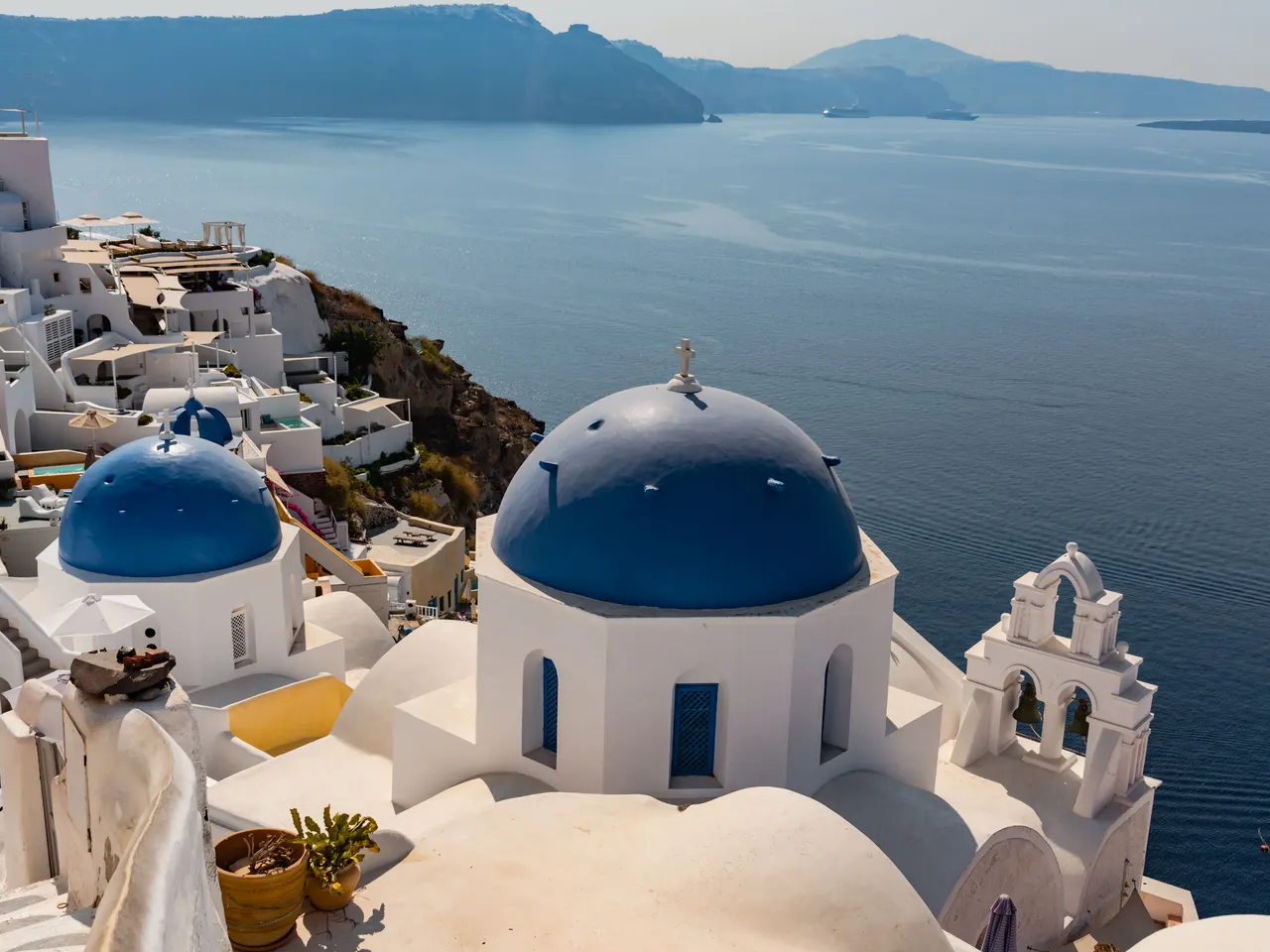
Oia is world-famous for its stunning caldera views, iconic blue-domed churches, and whitewashed buildings clinging to the cliffs. It is the quintessential viewpoint destination for experiencing the Aegean sunset.
Access. Accessible by ferry or flight to Santorini, then by bus or rental vehicle to the northern tip of the island.
Notes. Extremely crowded during sunset; arrive hours early for a prime viewing spot.

Palace of Knossos, Crete
Region of Crete
Theofanis Ampatzidis / Wikimedia Commons (CC BY-SA 4.0)
Knossos is the ceremonial center of the Minoan civilization and the legendary home of the Minotaur's Labyrinth. It is the most significant archaeological site on Crete, showcasing advanced ancient architecture and vibrant frescoes.
Access. Located just outside Heraklion, it is easily reached by local bus or taxi from the city center.
Notes. Highly recommended to hire a professional guide to understand the complex history of the site.

Temple of Apollon Epicurius, Bassae
Peloponnese Region
Banlout / Wikimedia Commons (CC BY-SA 4.0)
Located in the mountains of the Peloponnese, this temple is a masterpiece of classical architecture, famous for being one of the first sites in Greece to be inscribed on the UNESCO World Heritage list. It remains protected by a unique canopy structure to preserve its delicate stonework.
Access. Accessible by car via mountain roads from Andritsaina or Megalopoli.
Notes. Remote location; check local road conditions before traveling.

Temple of Poseidon, Sounion
Attica
Mary Markou / Wikimedia Commons (CC BY-SA 4.0)
Perched on a dramatic cliff overlooking the Aegean Sea, the Temple of Poseidon is a majestic landmark. It is particularly famous for its sunset views, which have inspired travelers and poets for centuries.
Access. A popular half-day trip from Athens by bus or rental car along the scenic coastal road.
Notes. The site is exposed to the elements; wind can be very strong.