
Freediving in Greece
Including Akrotiri Peninsula, Alonissos Marine Park, and Amorgos Island. On the map.
The vibe
Freediving here is a meditative practice, taking advantage of the deep, still pockets of blue water tucked away behind rocky headlands. It is best enjoyed in the shoulder seasons when the tourist crowds thin out and the sea surface remains glassy and calm. While there is a growing community of enthusiasts, it remains a largely independent pursuit where you find your own line and rhythm in the quiet depths.

Akrotiri Peninsula, Crete
Region of Crete
ElinaTzivara / Wikimedia Commons (CC BY-SA 4.0)
The dramatic rocky coastline of Akrotiri features steep drop-offs, crystal-clear visibility, and fascinating underwater topography. Freedivers frequently explore the rugged reefs and deep blue shelves along the northern coast.
Access. Short drive from Chania; independent breath-hold groups and local freedive guides organize shore and boat sessions from Marathi and Loutraki.
Notes. Exposed to northern swells when the Meltemi blows; shore entries require caution over rocky paths.

Alonissos Marine Park
Thessaly
dronepicr / Wikimedia Commons (CC BY 2.0)
As the largest marine protected area in Europe, Alonissos offers pristine waters and a high probability of encountering Mediterranean monk seals and dense schools of fish. The deep, protected channels provide excellent conditions for deep-water breath-hold sessions in a strictly regulated environment.
Access. Boat-based access from Patitiri port; requires coordination with local marine park authorities for specialized activities.
Notes. Strict protection rules apply; ensure all activities are compliant with the National Marine Park regulations.

Amorgos Island
South Aegean
VasCr / Wikimedia Commons (CC BY 3.0)
Famed for its crystal-clear blue waters and dramatic vertical drop-offs that inspired the film The Big Blue. Freedivers come here for deep water training along sheer island walls and sheltered bays with exceptional visibility.
Access. Accessible by ferry from Athens; local freediving instructors and seasonal training camps operate directly out of Aegiali and Katapola ports.
Notes. Open-water sites can experience strong Aegean winds (Meltemi); check local weather before heading out.
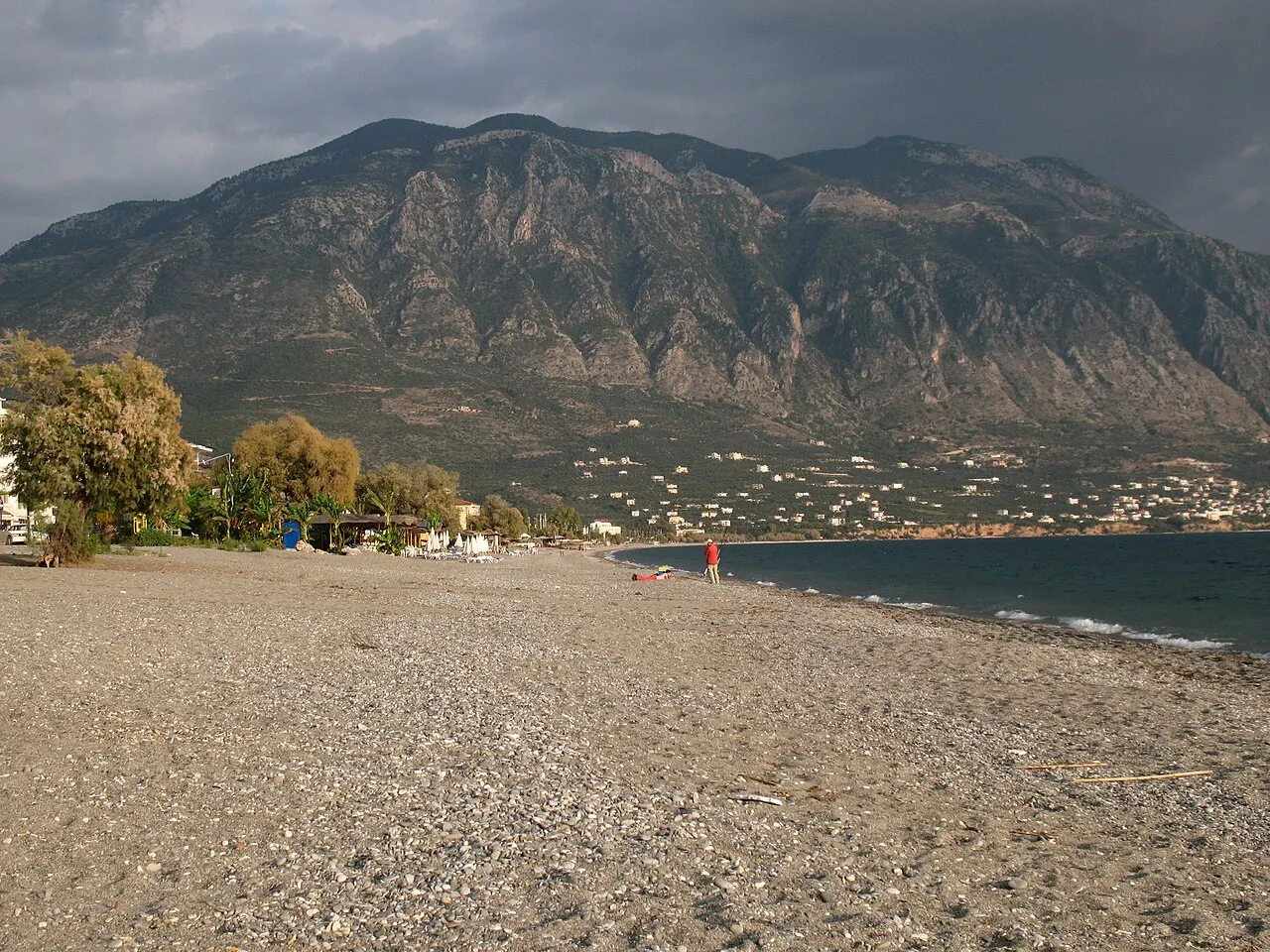
Kalamata, Messinian Gulf
Peloponnese Region
Macrolepis · Wikimedia Commons
The Messinian Gulf is the heart of Greek freediving, offering deep, calm, and protected waters ideal for constant-weight training. It is the primary hub for international freediving competitions and training camps due to its consistent conditions and deep water proximity to the shore.
Access. Multiple world-class freediving schools operate out of Kalamata, offering AIDA and Molchanovs courses and line-training sessions.
Notes. Excellent infrastructure for deep training; minimal currents compared to open Aegean sites.

Kalithea Springs, Rhodes
South Aegean
npinikas / Wikimedia Commons (CC BY 3.0)
Historic thermal springs area featuring rocky coves, grottos, and crystal-clear turquoise waters. The sheltered bays provide excellent conditions for shallow-to-mid-depth freediving and technique refinement.
Access. Located just south of Rhodes Town with easy road access; local dive and freediving operators run guided breath-hold excursions from the bay.
Notes. Popular with swimmers and snorkelers during peak summer hours; early morning sessions are recommended.

Keri Caves, Zakynthos
Ioanian Islands
maczopikczu / Wikimedia Commons (CC BY 3.0)
The Keri area on the southern coast of Zakynthos is famous for its massive sea arches and deep-blue cavern systems. The water is exceptionally clear, making it a premier destination for experienced freedivers to explore overhead environments and vertical walls.
Access. Boat access from Keri Lake harbor; private charters are common for freediving groups.
Notes. Some caves have overhead environments; proper safety protocols and local guidance are essential.

Lichadonisia Islands, Evia
Central Greece
George Mitsouras / Wikimedia Commons (CC BY-SA 3.0)
A volcanic islet complex off the coast of Evia often called the 'Greek Seychelles', featuring crystal-clear shallow channels and sunken wreckage. The vibrant marine life and fascinating underwater topography make it a rewarding breath-hold destination.
Access. Accessible via small excursion boats from Kamena Vourla or Lichas; local freediving groups run dedicated trips to the shallower wrecks and drop-offs.
Notes. Boat traffic can increase around the main beaches during midday in July and August.

Milos Island
South Aegean
dronepicr / Wikimedia Commons (CC BY 2.0)
Milos features dramatic volcanic topography with white rock formations and crystal-clear turquoise waters. Freedivers visit for the unique underwater caves, arches, and tunnels that provide a stunning backdrop for breath-hold exploration.
Access. Accessible via boat charters from Adamas port; several local dive centers cater to freedivers looking for guided cave and reef tours.
Notes. Strong winds (Meltemi) can affect boat access to the northern coast; always check local forecasts.

Paxos and Antipaxos
Ioanian Islands
Cristoforo Buendelmonti / Wikimedia Commons (CC BY-SA 4.0)
These Ionian islands are characterized by steep, limestone cliffs that drop sharply into deep, cobalt-blue water. The area is a favorite for freedivers seeking deep-water walls and high visibility, often exceeding 30 meters.
Access. Accessible by boat from Gaios or via day trips from Corfu; local freediving instructors organize seasonal training trips.
Notes. Deep water is found very close to the cliff faces; boat traffic can be high in peak summer.

Trizonia Island, Gulf of Corinth
Central Greece
Davide Mauro / Wikimedia Commons (CC BY-SA 4.0)
A tranquil island nestled in the calm waters of the Gulf of Corinth, sheltered from strong open-sea currents. The surrounding clear waters provide relaxed depth training and scenic mid-depth reef exploration on breath-hold.
Access. Reached via a short ferry hop from the mainland village of Tolofon; local freediving clinics occasionally run weekend camps here.
Notes. Minimal boat traffic in the immediate coves, making it exceptionally safe for relaxed training.

Vουλιαγμένη Lake, Athenian Riviera
Attica
Iakxos dionysos / Wikimedia Commons (CC BY-SA 4.0)
A brackish thermal lake set in a sunken limestone cave offering a unique enclosed freediving experience year-round. The underwater cavern system reaches a depth of over 100 meters in warm, mineral-rich waters.
Access. Easily reached by car or public transit from central Athens; managed entry with access for certified freedivers and instructors.
Notes. Strict environmental rules apply; prior arrangement or booking with local freediving clubs is required to access deep training lines.