
Beaches in Germany
Including Ahlbeck Beach, Baltrum Strand, and Binz Beach. On the map.
The vibe
The coast here feels like a brisk, refreshing escape where the focus is on expansive dunes and crisp northern air rather than tropical lounging. Summer is the only time the water invites a proper swim, though the shore remains a windswept destination for long walks year-round. You will find a mix of organized, chair-lined stretches near the resorts and vast, raw stretches of sand where you can easily find your own quiet corner.

Ahlbeck Beach, Usedom
Mecklenburg-Vorpommern
Niteshift / Wikimedia Commons (CC BY-SA 3.0)
Ahlbeck's broad sandy front on sunny Usedom island mixes fine pale sand with shallow, calm Baltic water and ornate Wilhelminian spa villas. The historic Seebrücke pier and long promenade define one of Germany's grandest seaside scenes. The beach continues freely across the Polish border to Świnoujście.
Access. Walk from Ahlbeck village along the promenade; Heringsdorf and Ahlbeck stations on the Usedomer Bäderbahn. Full resort amenities, strandkörbe, and pier restaurants.
Notes. Usedom is one of Germany's sunniest regions; Baltic water remains cool (roughly 16–20 °C in summer).

Baltrum Strand, Baltrum
Lower Saxony
Udo und Joan Fugel on geo.hlipp.de / Wikimedia Commons (CC BY-SA 2.0)
Known as the 'Sleeping Beauty' of the North Sea, Baltrum offers a serene, small-scale beach experience. The sand is soft and the beach is remarkably wide, providing a tranquil escape from the more crowded mainland resorts.
Access. Accessible by ferry from Neßmersiel; ferry schedules are dependent on the tide.
Notes. Access is strictly tide-dependent; plan travel carefully.

Binz Beach, Rügen
Mecklenburg-Vorpommern
Wolfgang Weber / Wikimedia Commons (CC BY 3.0)
Rügen's flagship resort beach pairs a broad, gently shelving sandy bay with grand Baltic spa architecture along the promenade. The water is calm and shallow near shore, ideal for family swimming on the island's sunniest coast. One of Germany's most photographed seaside strips.
Access. Directly from Ostseebad Binz via the Kurhaus and Strandpromenade; regional trains stop at Binz. Strandkörbe, lifeguards in season, cafés, and full resort facilities.
Notes. Very busy in July–August; water temperatures peak around 18–20 °C.

Boltenhagen Beach, Mecklenburg
Mecklenburg-Vorpommern
qwesy qwesy / Wikimedia Commons (CC BY 3.0)
Boltenhagen is a quieter Baltic alternative to Kühlungsborn — a curved bay of fine sand on the Weiße Wiek with calm, clear water and a 300-meter Seebrücke pier. Cliff-backed sections add scenery without sacrificing a broad swimmable shoreline. A local favorite for unhurried beach days.
Access. Drive or bus from Lübeck/Wismar to Ostseebad Boltenhagen; beach runs the length of the village. Strandkörbe, pier café, and a relaxed promenade; less crowded than major Rügen resorts.

Helgoland Düne Beach
Schleswig-Holstein
joergens.mi / Wikimedia Commons (CC BY-SA 3.0)
The small sandy islet of Helgoland Düne holds one of the North Sea's most unusual swim spots — a compact pale-sand beach a short boat ride from red-cliff Helgoland. Sheltered coves, clear water by North Sea standards, and a holiday-camp atmosphere make it a memorable half-day escape. Gray seals often haul out nearby.
Access. Passenger ferry or launch from Helgoland main island (~15 minutes); flat paths from the Düne landing to the beach. Limited services — day trippers should bring essentials.
Notes. Boat schedules are weather-dependent; respect seal resting zones roped off on the sand flats.

Inselstrand Poel, Mecklenburg
Mecklenburg-Vorpommern
Rauenstein / Wikimedia Commons (CC BY-SA 3.0)
Located in the Wismar Bay, this island beach offers calm, shallow waters and a relaxed atmosphere perfect for families. The fine, golden sand stretches along a protected coastline, making it a peaceful alternative to the busier Baltic resorts.
Access. Easily accessible by car or bus from Wismar via a causeway; well-serviced with beach chairs and nearby cafes.

Juist Strand
Lower Saxony
Dietmar Rabich / Wikimedia Commons (CC BY-SA 4.0)
Car-free Juist offers wide, natural North Sea sand along the island's north shore, with a calmer, family-oriented feel than Norderney. The beach runs for kilometres with dunes and strandkörbe, and the lack of traffic gives the shore a relaxed, almost timeless mood. Fine pale sand and clear shallows at high tide.
Access. Ferry from Norddeich to Juist harbour; walk or horse-drawn carriage to strand crossings — no cars on the island. Strandkörbe and small kiosks; less nightlife than Norderney.
Notes. Tidal flats expose wide mud at low water; best swimming around high tide in guarded sections.

Kampen Beach, Sylt
Schleswig-Holstein
Bianka Spindler / Wikimedia Commons (CC BY 3.0)
Kampen's North Sea shore below the Rotes Kliff combines fine pale sand with North Sea surf and Sylt's signature dune landscape. The beach is wide at low tide and backed by heath and thatched villages — Germany's most glamorous island swim spot. Dramatic light and space even when the water is cold.
Access. Car train or ferry to Sylt, then bus or bike to Kampen; parking near Rotes Kliff viewpoints with paths to the sand. Upscale village dining; fewer facilities directly on the beach than Baltic resorts.
Notes. North Sea water is cold (roughly 16–18 °C in summer) and currents can be strong; swim only at guarded sections.

Kniepsand, Amrum
Schleswig-Holstein
Jörg Braukmann / Wikimedia Commons (CC BY-SA 4.0)
Amrum's Kniepsand is a vast natural sandbank on the island's west side — up to ten kilometres long and famously wide, with pale quartz sand and open North Sea horizons. DLRG lifeguards watch the Norddorf bathing zone in summer, and the setting feels wilder and emptier than most German resort beaches. A benchmark North Frisian island swim shore and the place most visitors mean when they say "Amrum beach."
Access. Ferry from Dagebüll to Wittdün, then bus, bike, or shuttle to Norddorf strand crossings; strandkörbe, kiosks, and restaurants at the main Übergänge. Less built-up than Sylt but still well equipped in peak season.
Notes. Strong tides reshape channels daily; swim only in guarded zones. North Sea water stays cool (roughly 16–18 °C in summer) and currents can run near tidal cuts.

Kühlungsborn Beach, Mecklenburg
Mecklenburg-Vorpommern
Rosentod , attribution must include the URL http://de.wikipedia.org/wiki/Benutzer:Rosentod / Wikimedia Commons (CC BY-SA 3.0)
Germany's largest Baltic seaside resort stretches two linked towns along a continuous fine-sand beach facing the open Ostsee. Calm, gradually deepening water and a long promenade suit relaxed swimming and sunset walks. Less cliff-backed drama than Rügen, but excellent water quality and space.
Access. Regional train to Kühlungsborn West or Ost; beach runs the full length of town. Molli steam train links the two resort halves; ample strandkörbe and cafés.

Langeoog Strand
Lower Saxony
Landesamt für Geoinformation und Landesvermessung Niedersachsen (LGLN)/© GeoBasis-DE/LGLN / Wikimedia Commons (CC BY 4.0)
Langeoog's north-facing strand combines fine pale sand with classic East Frisian dune scenery and a family-friendly island village. The bathing zone near town is guarded in summer, while walks toward the eastern end open onto quieter dunes and bird-rich foreshore. A balanced mix of resort comfort and open North Sea space.
Access. Ferry from Bensersiel (car park on mainland); walk or cycle from the harbour through the car-free village to strand Übergänge. Strandkörbe, lifeguards, and cafés in season.
Notes. Swimming best around high tide; Wadden Sea flats are protected — stay on marked paths across the mud.

Nordbad, Borkum
Lower Saxony
MTheiler / Wikimedia Commons (CC BY-SA 4.0)
The Nordbad is the main beach on the westernmost East Frisian island, offering a vast expanse of fine sand that catches the sun all day. It is well-known for its therapeutic microclimate and high-quality facilities, including traditional beach baskets.
Access. Reached via ferry from Emden or Eemshaven, followed by a short island train ride into town.
Notes. Strong currents can occur; always swim within the marked lifeguard zones.
Nordstrand, Borkum
Lower Saxony
MTheiler / Wikimedia Commons (CC BY-SA 4.0)
Borkum's Nordstrand is the flagship bathing zone on Germany's westernmost East Frisian island, with kilometres of fine pale sand and a lively promenade. The beach feels open to the North Sea yet stays fully serviced with lifeguards, strandkörbe, and pier-side restaurants. A top pick for traditional Strandurlaub on the outer islands.
Access. Ferry from Emden or Eemshaven (Netherlands) to Borkum town; flat walk or island train to Nordstrand Übergänge. Busy spa infrastructure and Thalasso facilities nearby.
Notes. Strong winds and currents possible; stay within flagged bathing areas.

Nordstrand, Norderney
Lower Saxony
fotogoocom / Wikimedia Commons (CC BY 3.0)
Norderney's Nordstrand is the island's liveliest supervised bathing zone, pairing broad pale sand with a resort-town buzz. Beach volleyball, summer festivals, and long walks east toward quieter dunes make it the social heart of the East Frisian islands. Clear North Sea water and full lifeguard coverage in season.
Access. Short walk or bike from Norderney harbour and town; Nordbad I and II have separate guarded fields, strandkorb rental, and beachfront cafés. Ferry from Norddeich; very popular July–August.
Notes. Bathing hours are weather-dependent and typically from late morning; North Sea temperatures stay brisk.
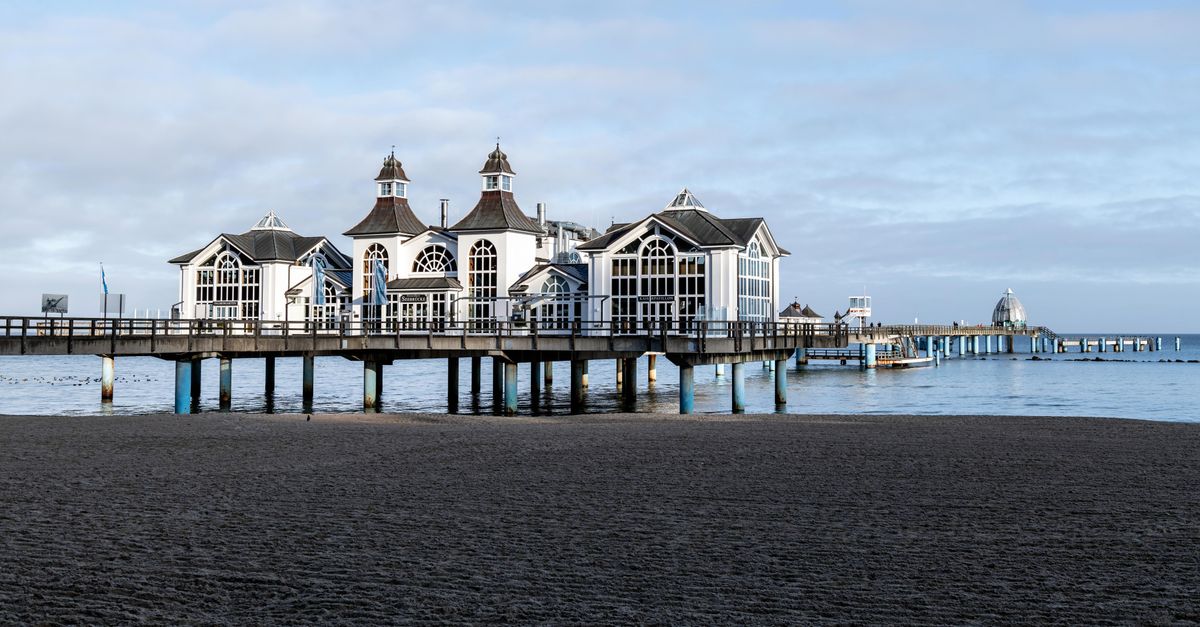
Sellin Beach, Rügen
Mecklenburg-Vorpommern
Photo by Wolfgang Weiser on Pexels
Elegant Sellin fronts a fine-sand bay beneath white resort villas and its famous Seebrücke pier. Shallow, sheltered Baltic water makes for easy swimming, and the pier's diving gondola is a local landmark. Distinct from neighboring Binz but equally iconic on Rügen's Bäderküste.
Access. Central in Ostseebad Sellin; walk from the Wilhelmstraße promenade to the beach and pier. Train to Sellin Ostseebad; strandkörbe and restaurants along the front.
Notes. Pier and beach get crowded on summer weekends.
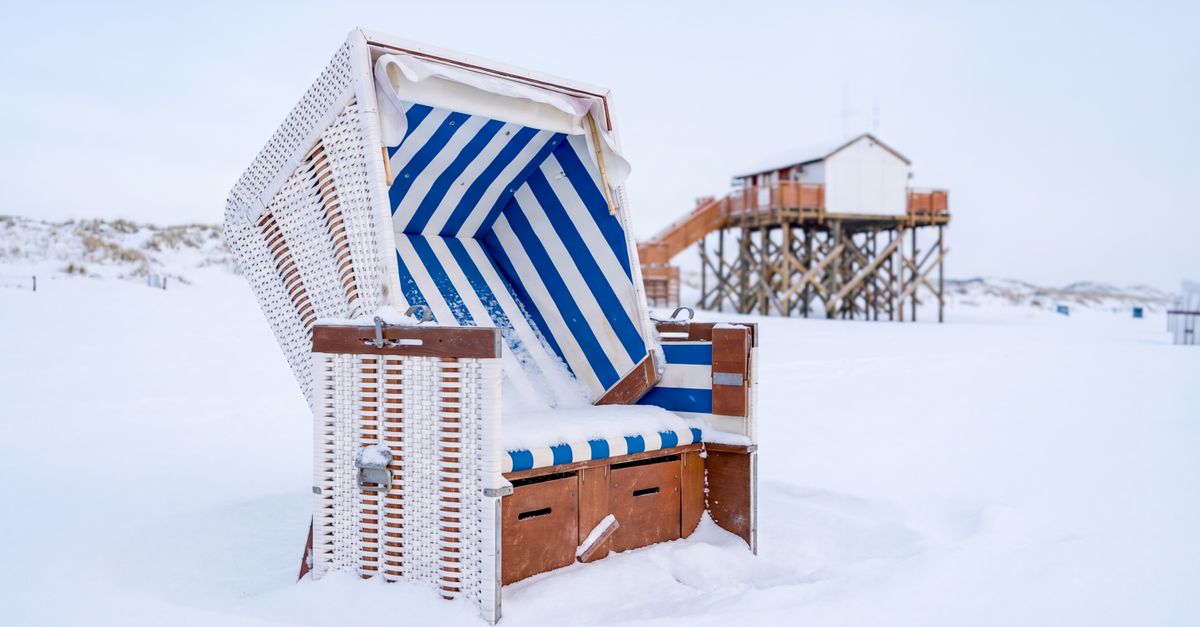
St. Peter-Ording Beach
Schleswig-Holstein
Photo by Matthis Volquardsen on Pexels
Germany's widest mainland North Sea beach stretches up to two kilometres across fine pale sand, framed by dunes and Wadden Sea salt meadows. Iconic stilt houses (Pfahlbauten) line the shore and the scale of open sky and sand is unmatched on the mainland coast. A classic tidal North Sea swim and beach-walk destination.
Access. Drive or train to St. Peter-Ording; each of five beach sections (Bad, Dorf, Ording, Ording-Nord, Böhl) has car parks and walkways over the dunes. Strandkörbe, lifeguards, restaurants, and kite-surf schools in season; very busy in summer.
Notes. Beach width and water edge shift dramatically with tides; follow lifeguard flags. Water is cold and currents can be strong away from supervised zones.

Strand Kellenhusen, Ostsee
Schleswig-Holstein
Ein Dahmer / Wikimedia Commons (CC BY-SA 4.0)
Kellenhusen is a family-friendly beach known for its unique pier and the adjacent forest that meets the dunes. The sand is soft and well-maintained, providing a classic seaside holiday environment.
Access. Accessible by car or regional bus from nearby towns; popular for summer vacations.

Strand Laboe, Kieler Förde
Schleswig-Holstein
Siegbert Brey / Wikimedia Commons (CC BY-SA 4.0)
Laboe is famous for its south-facing beach, which catches the sun throughout the day and offers a great view of the Kiel Fjord. The water is generally calm, making it a popular spot for swimming and watching naval traffic.
Access. Reached easily by ferry from Kiel harbor or by bus; the beach is located directly in front of the town's main facilities.

Strand Zingst, Fischland-Darß
Mecklenburg-Vorpommern
Dguendel / Wikimedia Commons (CC BY 3.0)
Zingst features a long, wide stretch of fine sand backed by charming dunes and a classic pier. It is a quintessential Baltic beach experience, known for its clean water and vibrant seaside promenade.
Access. Accessible by car or regional bus; the town is very bike-friendly with ample parking near the beach entrances.
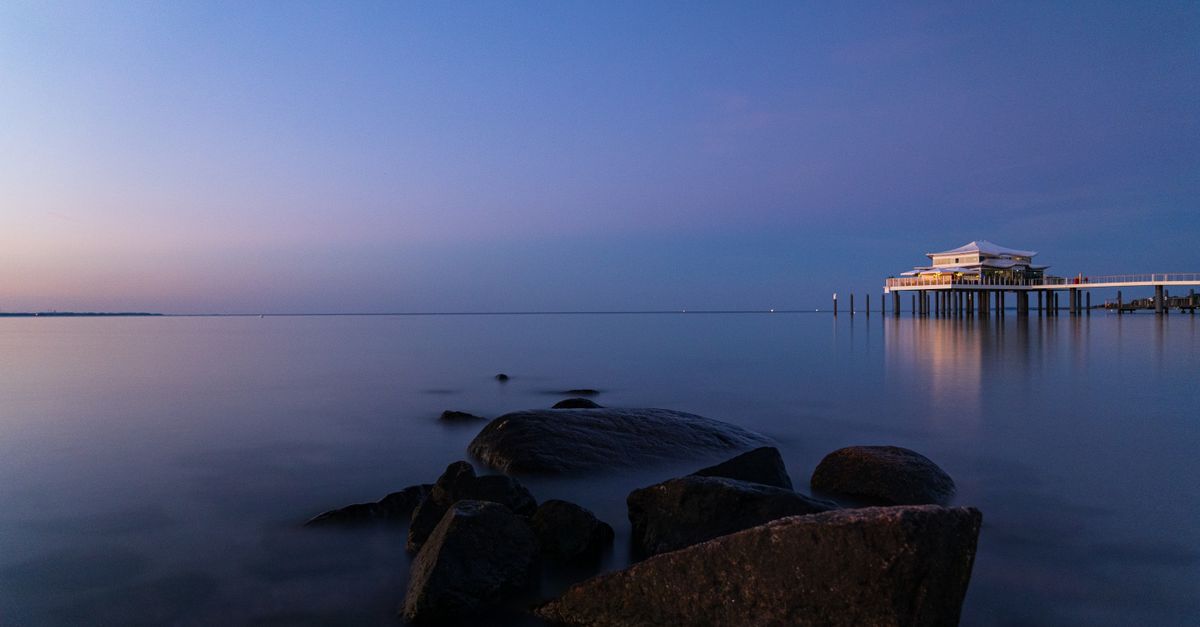
Timmendorfer Strand, Schleswig-Holstein
Schleswig-Holstein
Photo by Dominic Rosenkranz on Pexels
Timmendorfer Strand is the classic Baltic escape from Hamburg — a wide, groomed sand beach on the Lübeck Bay with shallow, family-friendly water. The Niendorf harbor promenade and pier add a lively resort atmosphere. Among Schleswig-Holstein's most accessible named swim shores.
Access. Direct IC/RE trains from Hamburg (~90 min) to Timmendorfer Strand station, then walk to the beach. Full resort strip with strandkörbe, hotels, and restaurants; crowded in peak season.
Notes. One of the Baltic's warmest stretches in late summer, though still cool by Mediterranean standards.

Warnemünde Beach, Rostock
Mecklenburg-Vorpommern
Schiwago / Wikimedia Commons (CC BY 2.5)
Warnemünde offers a wide, west-facing Baltic sand beach at the mouth of the Warnow river, framed by its lighthouse and the Teepott building. Shallow entry and calm bay water make it one of northern Germany's best urban swim beaches. A classic Hanseatic day-trip from Rostock.
Access. S-Bahn from Rostock to Warnemünde (~20 min), then a short walk to the strand. Lifeguards, strandkörbe, fish stalls, and a long promenade; very busy in summer.
Notes. Strong onshore wind possible; water typically 16–19 °C in peak season.
Weiße Düne, Norderney
Lower Saxony
Norderney's Weiße Düne lives up to its name with exceptionally pale, fine sand roughly five kilometres east of town. Shallow tidal pools and sandbars create calm wading at high water and a chic, slightly remote atmosphere compared with the busier town beaches. Among the brightest sand on the German North Sea coast.
Access. Walk, cycle, or island bus from Norderney town; strandkörbe and a kiosk in season. Less infrastructure than Nordstrand but easy day-trip from the ferry pier.
Notes. Tidal access varies — sandbars and Priele shift after storms; check local Strandsituation boards in season.
Weststrand, Darß
Mecklenburg-Vorpommern
Fourteen kilometers of wild Baltic shoreline inside Vorpommersche Boddenlandschaft National Park, backed by wind-sculpted pines and open dunes. The pale, fine quartz sand and unusually clear Baltic water feel far from Germany's resort towns. Often ranked among the country's most beautiful natural beaches.
Access. Park at Prerow, Ahrenshoop, or Born am Darß and walk forest trails to the shore (30–45 min). No facilities on the beach itself; bring food and water. Much quieter than the Darß resort side.
Notes. National park rules apply; stay on marked paths through the dunes. Baltic water is cool even in summer.
Weststrand, Wangerooge
Lower Saxony
Wangerooge's Weststrand faces the open North Sea with wide pale sand and the island's main supervised bathing field near the car-free village. Smaller and quieter than Norderney or Borkum, it trades nightlife for dunes, birdlife, and an unhurried spa-town charm. A classic outer-island swim shore with clear horizon views.
Access. Ferry and narrow-gauge train from Harlesiel on the mainland; walk from the station through the village to Weststrand crossings. Strandkörbe and a compact promenade; no cars.
Notes. Island is tide-dependent for some services; best swimming at high tide in guarded zones.
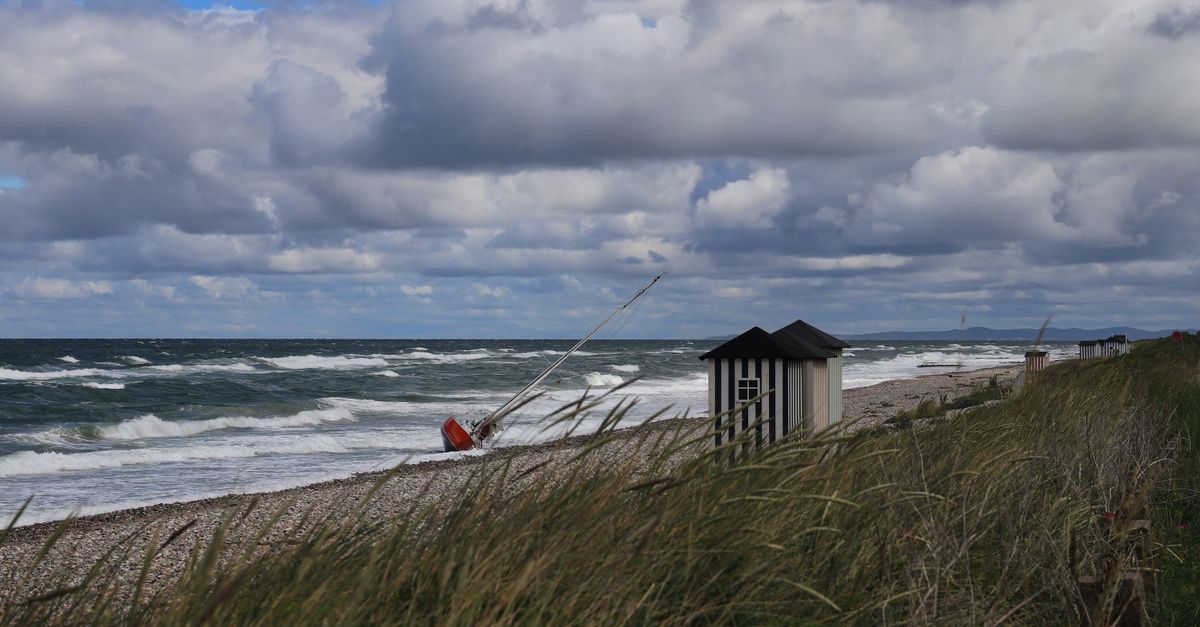
Wyk Strand, Föhr
Schleswig-Holstein
Photo by Christina & Peter on Pexels
Wyk auf Föhr's Süderstrand is the main bathing beach on Amrum's neighbour island, with broad pale sand and a sheltered Frisian village backdrop. The shore is gentler and more family-oriented than open-ocean Sylt, with shallow wading at high tide and classic strandkorb rows. A natural pairing for an Amrum or North Frisian island trip.
Access. Ferry from Dagebüll or Schlüttsiel to Wyk harbour; short walk to Süderstrand crossings. Strandkörbe, lifeguards, and waterfront cafés in summer.
Notes. Like all North Frisian shores, tidal range is large — check local Badezeiten for guarded hours.