
Beaches in Croatia
Including Banje Beach, Bačvice Beach, and Bijeca Beach. On the map.
The vibe
The coastline here is defined by stark white limestone and smooth pebbles rather than endless stretches of sand, giving the water a brilliant, glass-like clarity. Mid-summer brings a vibrant, social energy to every cove, while the shoulder months offer a much quieter, contemplative experience. You will find a mix of highly serviced areas with sun loungers and completely raw, pine-shaded inlets where you are left entirely to your own devices.

Banje Beach, Dubrovnik
Dubrovnik-Neretva County
Chris Brown / Wikimedia Commons (CC BY-SA 2.0)
Dubrovnik's flagship city beach sits below the Old Town walls with views of Lovrijenac fortress and the walled city above. Clear Adriatic water, pebble shore, and a lively beach-club scene make it the classic urban swim spot. Easy to combine with sightseeing.
Access. Five-minute walk east from Ploče Gate; taxi or bus to the Old Town area. Sunbeds and restaurants on the beach; very busy in cruise season.

Bačvice Beach, Split
Split-Dalmatia County
dronepicr / Wikimedia Commons (CC BY 2.0)
Split's iconic city beach — a shallow sandy bay right beside the ferry port where locals play picigin in knee-deep water. Warm, sheltered, and genuinely sandy in a country dominated by pebble shores. The urban Adriatic beach experience at its most authentic.
Access. Ten-minute walk from Diocletian's Palace or bus to the Bačvice district; bars, showers, and nightclubs behind the sand. Very busy July–August.

Bijeca Beach, Medulin
Istria County
ajoman33 / Wikimedia Commons (CC BY 3.0)
A rare long sandy stretch on the Istrian peninsula offering shallow, warm waters ideal for families and wading. Shaded by pine trees along the promenade, it provides a gentle contrast to the region's typical rocky coastlines.
Access. Easily reached by car or local bus in Medulin, with ample parking and amenities nearby.

Divna Beach, Pelješac
Dubrovnik-Neretva County
Kris Sliver / Wikimedia Commons (CC BY-SA 3.0)
A sheltered pebble bay on the north Pelješac coast where pine-covered hills drop straight to glassy blue water. Fine stones and gentle depths make for easy swimming and snorkeling around a small offshore islet. Lives up to its name — divna means beautiful in Croatian.
Access. Scenic but narrow drive from Trpanj; limited parking fills quickly in August. Small campsite café nearby; otherwise largely undeveloped.
Notes. Parking and the access road get congested on peak summer weekends — arrive before 9 a.m.

Donje Celo Beach, Koločep
Dubrovnik-Neretva County
dronepicr / Wikimedia Commons (CC BY 2.0)
The main sandy-pebble bay of Koločep, the nearest Elafiti island to Dubrovnik, with calm green-blue water in a sheltered cove. A small village sits behind the shore and the island is entirely car-free. A relaxed alternative to Banje without leaving the archipelago.
Access. Passenger ferry from Dubrovnik Gruz (~30 minutes) to Donje Čelo; the beach is steps from the pier. Limited summer tavernas; no cars on the island.

Dubovica Beach, Hvar
Split-Dalmatia County
David Dreher / Wikimedia Commons (CC BY-SA 3.0)
A long pebble arc south of Hvar Town, with a stone manor above the shore and unusually clear water for such an accessible bay. Smooth white pebbles and a gentle shelf make it one of the island's most popular day beaches. Classic south-Hvar swimming in a photogenic setting.
Access. Scooter or taxi from Hvar Town (~20 minutes), then walk from roadside parking; beach restaurant and sunbeds in season. Busy 11 a.m.–4 p.m.

Grebišće, Hvar
Split-Dalmatia County
fan_tomas / Wikimedia Commons (CC BY 3.0)
A north-coast Hvar bay where pale sand mixes with pebble in shallow, warm water backed by pine forest. Calmer than the island's open south shore and popular with families for its gentle slope. One of Hvar's better sand-oriented swim beaches.
Access. Drive or scooter from Jelsa or Hvar Town (~20 minutes); parking above the bay. Beach bar and sunbeds in summer.

Jagodna Beach, Hvar
Split-Dalmatia County
spacebirdy (also known as geimfyglið (:> )=| made with Sternenlaus -spirit) / Wikimedia Commons (CC BY-SA 3.0)
A south-facing pebble cove below Sveta Nedjelja village, with deep blue water and cliff-backed scenery on Hvar's wine-country coast. Smooth stones and clear depths attract swimmers and snorkelers away from Hvar Town's bustle. A mellow alternative on the island's western half.
Access. Steep road from Hvar Town toward Sveta Nedjelja, then walk down to the shore; limited parking. One or two seasonal tavernas.
Notes. Afternoon maestral wind can chop the surface; access path is steep in places.

Lovrečina Bay, Brač
Split-Dalmatia County
Sztudva Gyöngyi / Wikimedia Commons (CC BY-SA 3.0)
A picturesque sandy cove tucked into the northern coast of Brač Island, featuring ruins of an ancient 5th-century basilica nearby. The shallow sea and sandy seabed make it a beloved destination for families and day-trippers.
Access. Reachable by car from Postira or via coastal walking trails through olive groves and pine woods.

Lubenice Beach, Cres
Primorje-Gorski Kotar County
Alexandre Albore ( Ruthven ) / Wikimedia Commons (Public domain)
A remote pebble cove below the medieval cliff village of Lubenice on Cres, with deep blue open-sea water and almost no development. Steep cliffs drop to a small but pristine swim shore at the base of the island's west coast. Raw Kvarner scenery at its best.
Access. Drive to Lubenice village on Cres, then a demanding 45-minute hike down to the beach — or day boat from Cres or Valun. No facilities on the sand.
Notes. Strenuous return climb; no shade on the beach itself; plan water and timing carefully.

Meline Beach, Krk
Primorje-Gorski Kotar County
Stefan.lefnaer / Wikimedia Commons (CC BY-SA 4.0)
A broad sand beach in Kvarner Bay near Čižići on Krk, known for warm shallow water and therapeutic mud flats at low tide. The sandy seabed and gentle slope suit families and long swims. Northern Adriatic sunshine without the Dalmatian ferry hops.
Access. Drive across Krk bridge to Čižići village; parking near the shore. Beach bars and campsites nearby; popular with Central European holidaymakers.
Notes. Mud flats exposed at low tide; mosquito repellent useful near marshy backwaters.

Meštral Beach, Prvić
Šibenik-Knin County
Mnalis / Wikimedia Commons (CC BY 4.0)
A charming and quiet pebble beach on the traffic-free island of Prvić, featuring calm, crystal-clear water and a relaxed local atmosphere. It is ideal for leisurely swimming and sunbathing away from city crowds.
Access. Reached via a short passenger ferry ride from Šibenik or Vodice to Prvić island.

Nugal Beach, Makarska
Split-Dalmatia County
Krister from Norway / Wikimedia Commons (CC BY-SA 2.0)
A secluded pebble beach framed by steep red limestone cliffs and dense pine forests along the Makarska Riviera. The tranquil atmosphere and pristine waters make it a treasured retreat for nature lovers.
Access. Reachable via a scenic 20-minute coastal walking trail from Makarska or Tučepi.
Notes. Traditionally frequented as a clothing-optional (naturist) beach.

Orahova Beach, Mljet
Dubrovnik-Neretva County
Vedran V / Wikimedia Commons (CC BY-SA 4.0)
Nestled along the verdant shores of Mljet island, this charming beach combines clear turquoise sea views with a peaceful, tree-lined coast. It is ideal for swimmers looking to unwind in a pristine Mediterranean setting.
Access. Reached via ferry to Mljet, then a short drive or bike ride down the island's coastal roads.

Paradise Beach, Rab
Primorje-Gorski Kotar County
Zoran Kurelić Rabko / Wikimedia Commons (CC BY-SA 3.0)
Rajska plaža in Lopar is one of the Adriatic's longest natural sand beaches, with shallow warm water ideal for wading. Fine sand stretches for nearly two kilometers along Rab's northern tip, backed by low dunes and pine. A rarity in pebble-dominated Croatia.
Access. Ferry to Lopar on Rab; the beach runs along the resort strip with parking, bars, and rentals. Can be crowded in August.
Notes. Very shallow for a long distance — better for wading and families than deep-water swimming.

Pasjača Beach, Konavle
Dubrovnik-Neretva County
MEETCROATIA_NET / Wikimedia Commons (CC BY 3.0)
Carved directly into dramatic sheer cliffs south of Dubrovnik, this tiny pebble shore is reached through a hand-carved tunnel in the rock. The electric blue water and vertical rock faces make it one of the most dramatic coastal spots in the region.
Access. Accessed via a steep footpath and tunnel carved into the cliff face from Popovići village.
Notes. Natural rockfalls can occasionally occur; exercise caution near the cliff base.

Pinizule Beach, Kamenjak
Zadar County
Giorgio Davanzo / Wikimedia Commons (CC BY-SA 3.0)
A pocket pebble-and-rock cove on the Kamenjak peninsula at Istria's southern tip, with vivid turquoise water and limestone platforms for sunbathing. Part of a protected nature park dotted with hidden swim spots along wild cliffs. Istria's best clear-water coastal escape.
Access. Drive to Premantura, enter Kamenjak Nature Park (entry fee in season), then walk or bike to Pinizule cove on park trails. No facilities at the waterline.
Notes. Rocky entries and sea urchins — water shoes recommended; park entry fee applies in summer.

Pokonji Dol, Hvar
Split-Dalmatia County
MNHNL pbraun / Wikimedia Commons (CC BY-SA 3.0)
A compact pebble cove five minutes east of Hvar Town, with a candy-striped lighthouse on the headland and transparent water over smooth stones. Easy to combine with a town stay yet feels like a proper escape once you step onto the shore. One of the island's handiest quality swim spots.
Access. Marked footpath from the eastern edge of Hvar Town (~15–20 minutes walk) or water taxi from the harbor. Small beach bar in summer.
Notes. Path has some loose rock; the cove gets crowded when tour boats arrive mid-day.

Punta Rata, Brela
Split-Dalmatia County
qbanez / Wikimedia Commons (CC BY 3.0)
The signature pebble beach of Brela on the Makarska Riviera, framed by pine trees and the famous Kamen Brela boulder offshore. Calm, transparent water and a long walkable shore make it a classic Croatian family beach. Regularly listed among the country's best.
Access. Drive or bus along the coastal road south of Makarska; parking and steps to the promenade. Very popular — arrive early in peak season.

Pupnatska Luka, Korčula
Dubrovnik-Neretva County
Kris Sliver / Wikimedia Commons (CC BY-SA 3.0)
A deep, narrow pebble bay on Korčula's south coast where forested hills plunge into intensely clear Adriatic water. White smooth stones and steep sides give it a fjord-like feel unusual for the region. One of the island's prettiest named swim coves.
Access. Drive from Korčula Town toward Pupnat (~30 minutes on winding roads); parking above the beach and short walk down. Small summer snack bar.
Notes. Limited shade on the pebbles; road is narrow — drive carefully in peak season.
Pupnatska Luka, Korčula
Dubrovnik-Neretva County
Kris Sliver / Wikimedia Commons (CC BY-SA 3.0)
A stunning secluded pebble bay sheltered by green hills on the southern coast of Korčula Island. The crystal-clear sea grades from emerald to deep blue, providing excellent conditions for swimming and relaxing.
Access. Reachable by car down a narrow, winding road from the main island highway, with a small parking area near the shore.

Queen's Beach, Nin
Zadar County
eugen-de / Wikimedia Commons (CC BY-SA 3.0)
Kraljičina plaža curves around a shallow lagoon near historic Nin with long stretches of fine beige sand and warm, knee-deep water. Salt pans and Velebit peaks frame the horizon on clear days. One of northern Dalmatia's best family swimming beaches.
Access. Drive from Zadar (~20 minutes) to the Nin lagoon parking areas; beach bars and rentals along the shore. Can fill on August weekends.
Notes. Very shallow for a long distance — better for wading and families than deep-water laps.

Sakarun Beach, Dugi Otok
Zadar County
Laurent de Walick from The Hague, The Netherlands / Wikimedia Commons (CC BY 2.0)
Famous for its sweeping crescent of fine white sand and shallow, luminous turquoise shallows that stretch far out into the bay. Backed by pine forests, it offers a distinctly tropical color palette in the middle of the Adriatic.
Access. Reached via ferry to Dugi Otok followed by a local bus, tourist train, or rental car/bike.

Saplunara Beach, Mljet
Dubrovnik-Neretva County
rene boulay / Wikimedia Commons (CC BY-SA 3.0)
A protected sandy lagoon nestled within a lush pine forest on the southeastern tip of Mljet Island. The shallow, calm waters remain comfortably warm throughout the summer, offering a tranquil escape from busier mainland spots.
Access. Accessible by car or scooter from the ferry ports on Mljet via winding island roads.

Skrivena Luka, Lastovo
Dubrovnik-Neretva County
Skrivena Luka — Wikipedia
A wide pebble bay on Lastovo's south coast, anchored by the island's lighthouse and backed by unspoiled Mediterranean scrub. Remote, quiet, and glassy-clear — the kind of Adriatic beach you reach deliberately. Lastovo Nature Park at its most swimmable.
Access. Ferry or catamaran to Lastovo, then drive or taxi across the island (~45 minutes from Ubli). Guesthouse restaurant near the lighthouse; very limited development.
Notes. Island ferry schedules are sparse off-season; plan an overnight for a relaxed visit.

St. John Beach, Pag
Lika-Senj County
pepanos / Wikimedia Commons (CC BY 3.0)
A dramatic pebble shore situated beneath towering limestone cliffs on the island of Pag, offering startlingly clear blue waters. It provides a striking contrast between stark white stone and deep sea hues.
Access. Accessible primarily via boat excursions or a steep, rewarding hiking trail from nearby Pag villages.

Stiniva Beach, Vis
Split-Dalmatia County
dronepicr / Wikimedia Commons (CC BY 2.0)
A cliff-walled pebble cove on Vis reached through a narrow sea gate just meters wide. Turquoise water fills an amphitheater of limestone, with smooth white stones underfoot and dramatic walls on all sides. Often ranked among Europe's finest hidden beaches.
Access. Ferry to Vis Town, then boat excursion from Vis or Komiža — the usual approach. Steep 20–30 minute hike from Žužec hamlet is an alternative; no road to the sand.
Notes. Rough footpath not suited to small children; half the cove stays in cliff shade much of the day.

Stiniva Cove, Vis
Split-Dalmatia County
dronepicr / Wikimedia Commons (CC BY 2.0)
Tucked away between sheer limestone cliffs, this dramatic hidden cove features a narrow opening to the open sea and a small pebble shore. The crystalline turquoise water is framed by rugged karst rock walls, creating one of the most striking and secluded swim spots in the Adriatic.
Access. Accessible via a steep, challenging hiking trail down from the cliffs or by water taxi from Rukavac.
Notes. Very crowded during peak summer midday hours; visiting early or late is recommended.

Sv. Ivan Beach, Cres
Primorje-Gorski Kotar County
nschuwi / Wikimedia Commons (CC BY 3.0)
A pristine white pebble beach situated beneath the cliffside village of Lubenice on Cres Island. The steep descent rewards visitors with utterly transparent turquoise waters and profound solitude away from large resorts.
Access. Reached via a steep 45-minute hike down from Lubenice or by boat from nearby ports.
Notes. The hike back up is extremely steep and strenuous under the sun; bring plenty of water.

Vallein Beach, Bale
Istria County
nikola_pu / Wikimedia Commons (CC BY-SA 3.0)
A pristine stretch of natural coastline near the historic town of Bale in Istria, featuring smooth white pebbles and crystalline emerald waters. Surrounded by untouched macchia and pine forests, it offers a tranquil escape.
Access. Reachable by car down well-maintained resort tracks from Bale, with parking near the shore.

Vela Plaža, Baška
Primorje-Gorski Kotar County
Imatges, algunes lle… / Wikimedia Commons (CC BY 3.0)
A nearly two-kilometer-long curving pebble beach on Krk Island backed by the dramatic slopes of the Velebit mountains. The water is exceptionally clear, making it a favorite for swimming and snorkeling along the coast.
Access. Located right in front of Baška town with easy walking access, parking, and extensive tourist facilities.
Notes. Gets very busy in July and August due to its popularity and easy access.

Vela Pržina, Lumbarda
Dubrovnik-Neretva County
Quahadi Añtó 07:58, 14 September 2012 (UTC) / Wikimedia Commons (CC BY-SA 3.0)
Korčula's largest sandy beach — a half-kilometer south-facing bay in Lumbarda with fine beige sand and shallow, warm water. Grk-wine vineyards and pines border the shore, and the open channel views stretch toward Lastovo. A rare proper sand beach in southern Dalmatia.
Access. Bus or taxi from Korčula Town (~15 minutes), or walk/bike from Lumbarda village; paid parking behind the beach in summer. Cafés and sunbed rentals on site.
Notes. Gets crowded in August; dogs banned 1 July–31 August.
Zaraće, Hvar
Split-Dalmatia County
Twin pebble coves — Veliko and Malo Zaraće — tucked below cliffs near Jelsa with emerald water and rocky headlands for snorkeling. The larger bay holds most swimmers; the smaller feels more intimate. Standout east-Hvar scenery without the Stiniva-level access ordeal.
Access. Drive or scooter from Jelsa or Hvar Town; parking above the bays and short walk down. Seasonal konoba on the main cove.
Notes. Rocky entries at the smaller cove; sea urchins on nearby rocks — watch your step.
Zlatni Rat, Brač
Split-Dalmatia County
Photo by Vladimir Srajber on Pexels
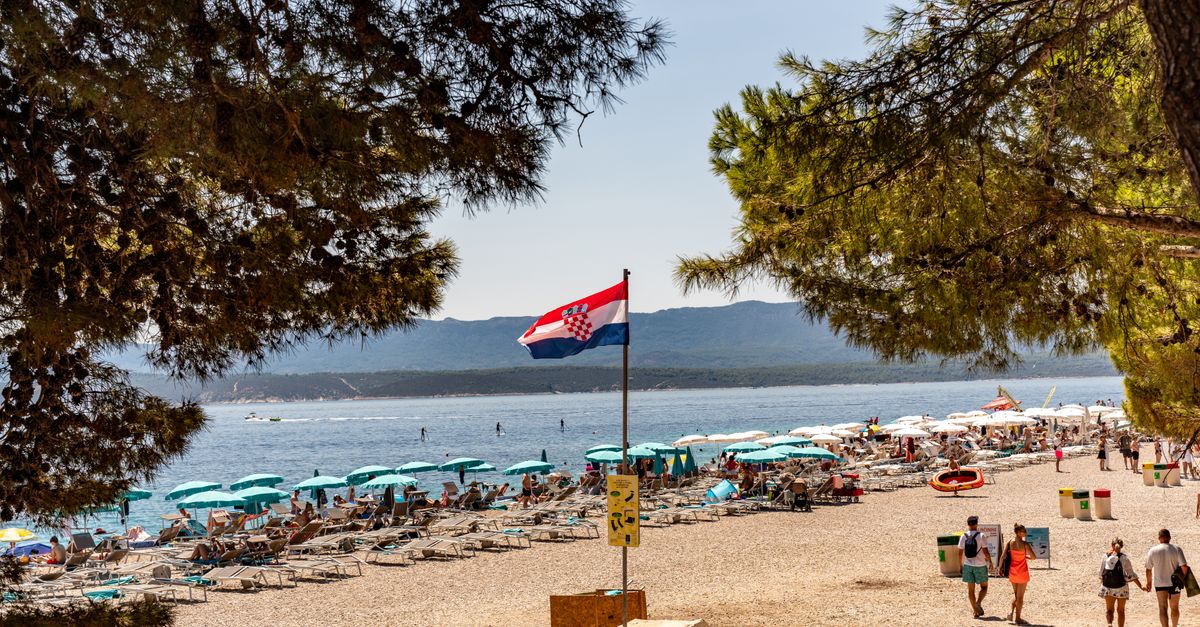
Croatia's most photographed shore — a white-pebble spit that curves into turquoise Hvar Channel waters off Bol. The tip shifts with wind and tide, but both sides stay swimmable with pine shade behind the beach. An Adriatic icon for clear water and a walkable shoreline.
Access. Ferry or catamaran to Bol on Brač, then a flat 15-minute walk or short taxi from town. Busy in July–August; sunbeds and beach bars on the main strip.
Notes. Strong afternoon maestral can push the spit eastward; currents are felt at the outer tip.

Zrće Beach, Pag
Lika-Senj County
Gary Brown (photograph) Hideout Festival (sculpture of logo) / Wikimedia Commons (CC BY-SA 4.0)
A famous long pebble shore on Pag Island known for its vibrant beach club culture and crystal-clear Adriatic water. Surrounded by sparse limestone hills, it offers a starkly beautiful natural setting alongside world-class summer entertainment.
Access. Easily accessed by shuttle bus, car, or taxi from the town of Novalja.
Notes. Transforms into a major festival and nightlife hub during peak summer months.
Šunj Beach, Lopud
Dubrovnik-Neretva County
Photo by Nikola Kojević on Pexels
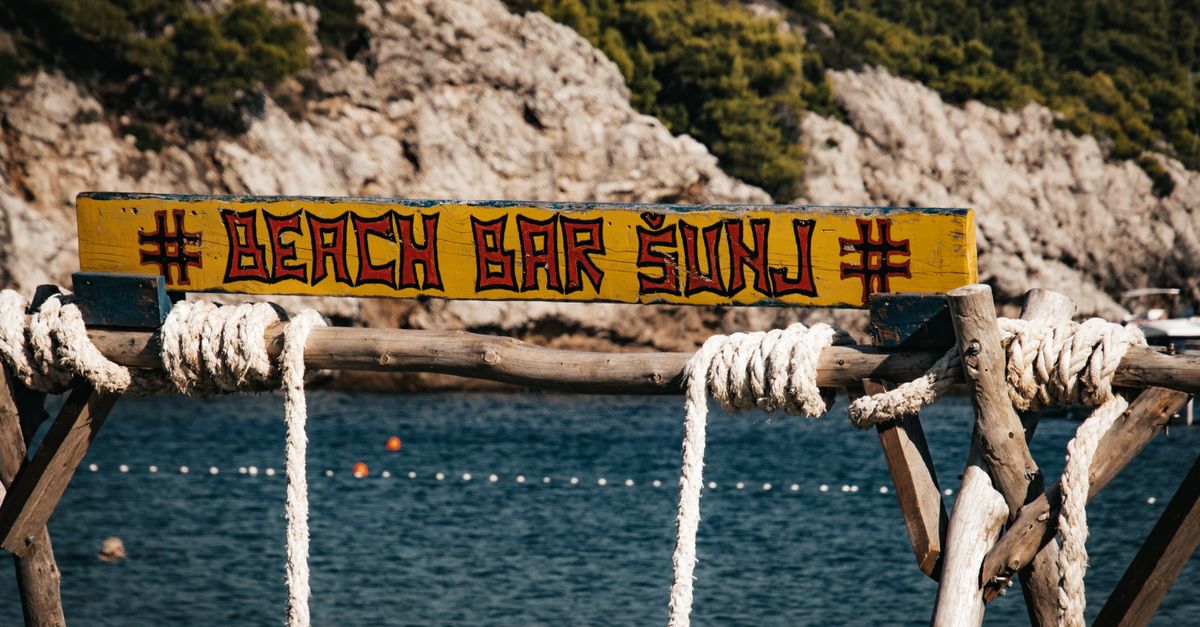
A gently curving sand-and-fine-pebble bay on the car-free Elafiti island of Lopud, with knee-deep turquoise water stretching far offshore. Pine groves line the back of the beach and the setting feels quieter than Dubrovnik's mainland strips. One of the closest truly swimmable sand beaches to the city.
Access. Passenger ferry from Dubrovnik to Lopud (~1 hour), then 20-minute walk or golf-cart taxi across the island to the south coast. Beach bars and sunbeds in summer.
Notes. Island has no cars; last ferries limit evening return times.